Choosing the Best Denial Management System for Your Workflow
Why Healthcare Denial Management Systems Are Critical for Your Revenue Cycle
Healthcare denial management systems are software platforms that help providers identify, track, appeal, and prevent claim denials — protecting revenue that would otherwise be lost.
Here is a quick overview of the top system types covered in this guide:
System Type Best For Standout Feature AI-Powered Platforms High-volume practices Automated appeal generation & predictive analytics EHR-Integrated Modules Small to mid-size clinics Seamless workflow within existing patient charts Enterprise RCM Suites Large health systems End-to-end automation and deep financial reporting Clearinghouse-Based Tools Billing teams Real-time claim scrubbing and instant eligibility checks
The numbers are hard to ignore. $262 billion in claims are denied every year across the U.S. health system. Initial denial rates hit 11.8% in 2024. And 65% of those denials are never resubmitted or reworked — meaning most of that revenue is simply abandoned. For Medicare-related claim processing and appeal guidance, providers can also reference the official CMS Medicare Claims Processing Manual.
For many practices, the problem is not just the denials themselves. It is the cycle they create: staff spending hours on appeals, cash flow slowing down, and the same errors repeating month after month. As one practice manager put it, the impact goes far beyond delayed reimbursements — it leads to billing disputes with patients and a reactive cycle that chips away at both financial stability and patient trust.
The good news? The right denial management system can break that cycle — before and after claims go out the door.
I'm Olivia Harper, founder of National Billing Institute and a denial management specialist with over 30 years of experience in medical revenue cycle management, where I have seen how the right healthcare denial management systems can transform a practice's financial performance. In this guide, I'll walk you through the leading platform types available in 2026 so you can find the best fit for your workflow.
The Financial Impact of Claim Denials in Healthcare Billing
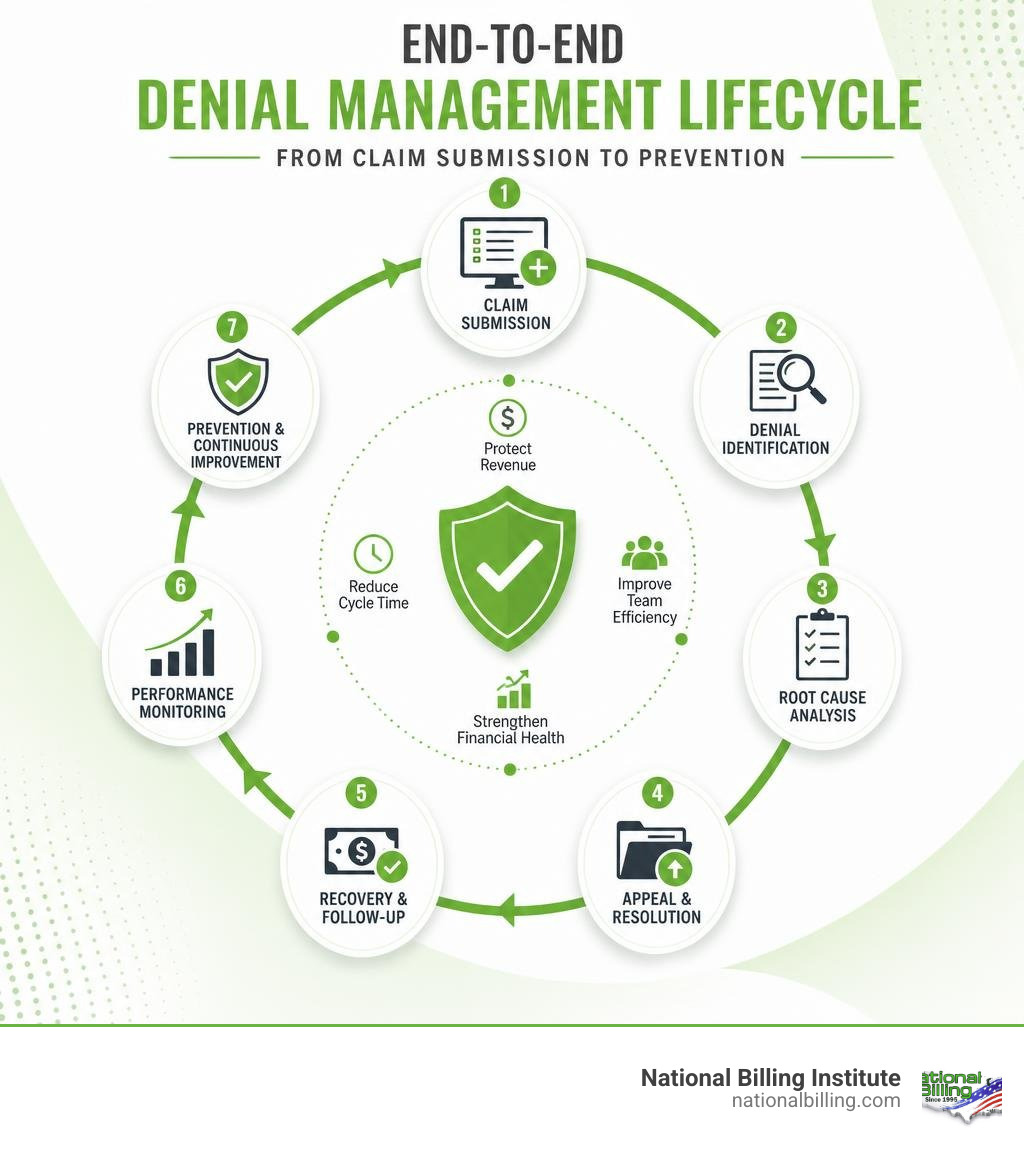
In medical billing, a denied claim is more than just an administrative speed bump—it is a direct leak in your practice's financial pipeline. Every time a payer returns a claim without payment, the clock starts ticking, administrative costs rise, and the likelihood of recovering your hard-earned cash begins to drop.
With the cost of contesting denials jumping by 23% between 2022 and 2023, leaving money on the table is no longer an option. If your team is stuck in a loop of manually sorting through old claims, you are fighting a losing battle against payer bureaucracy. This is where proactive Denial Prevention strategies and modern technology make all the difference.
Common Causes of Medical Billing Denials
To defeat the "denial monster," we must first understand what feeds it. The vast majority of denials do not stem from highly complex clinical disputes. Instead, a staggering 67% of denials start with front-end breakdowns. These are simple administrative errors that happen long before the provider even sees the patient, such as:
Eligibility issues: Checking a patient's coverage after the visit instead of before.
Prior authorization gaps: Proceeding with services before obtaining the required insurance green light.
Registration errors: Simple typos in a patient's name, policy number, or group ID.
When these claims reach the payer, they are flagged with specific Medical Billing Denial Codes. Some of the most common codes your billing team encounters include:
CO-252: This code indicates that the service requires prior authorization, but the approval was not secured before the claim was submitted.
CO-97: This means the billed service is considered bundled or included in another service that has already been processed and paid.
CO-45: This shows that the billed amount exceeds the payer's contractually allowed charge.
Shifting from Reactive to Proactive Denial Prevention
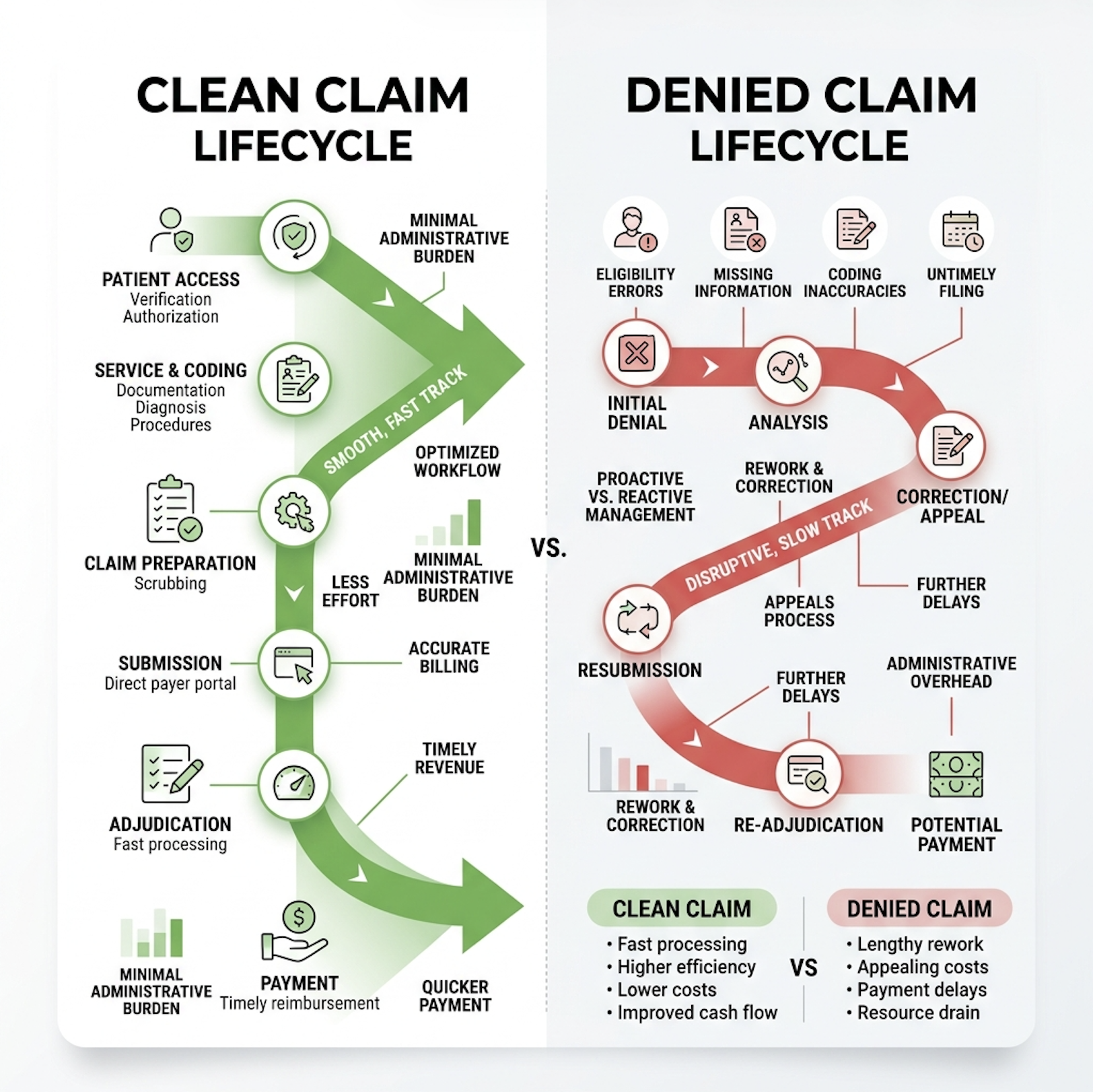
Most traditional billing offices operate reactively. They submit a claim, wait for the denial, and then scramble to write an appeal before the timely filing window slams shut. This reactive approach is incredibly expensive and highly inefficient.
By shifting to a proactive model using modern denial management software, providers can stop errors in their tracks. Modern systems use advanced rules engines and automated claim scrubbing to flag potential issues before submission. Implementing structured Denial Reduction Services ensures that registration details, eligibility status, and coding requirements are verified in real time, shifting your team's focus from damage control to prevention.
Evaluating Modern Healthcare Denial Management Systems
Choosing the right platform requires looking beyond basic dashboards. You need a system that acts as an execution layer, integrating seamlessly into your daily operations to solve your specific revenue bottlenecks.
Key Features of Advanced Healthcare Denial Management Systems
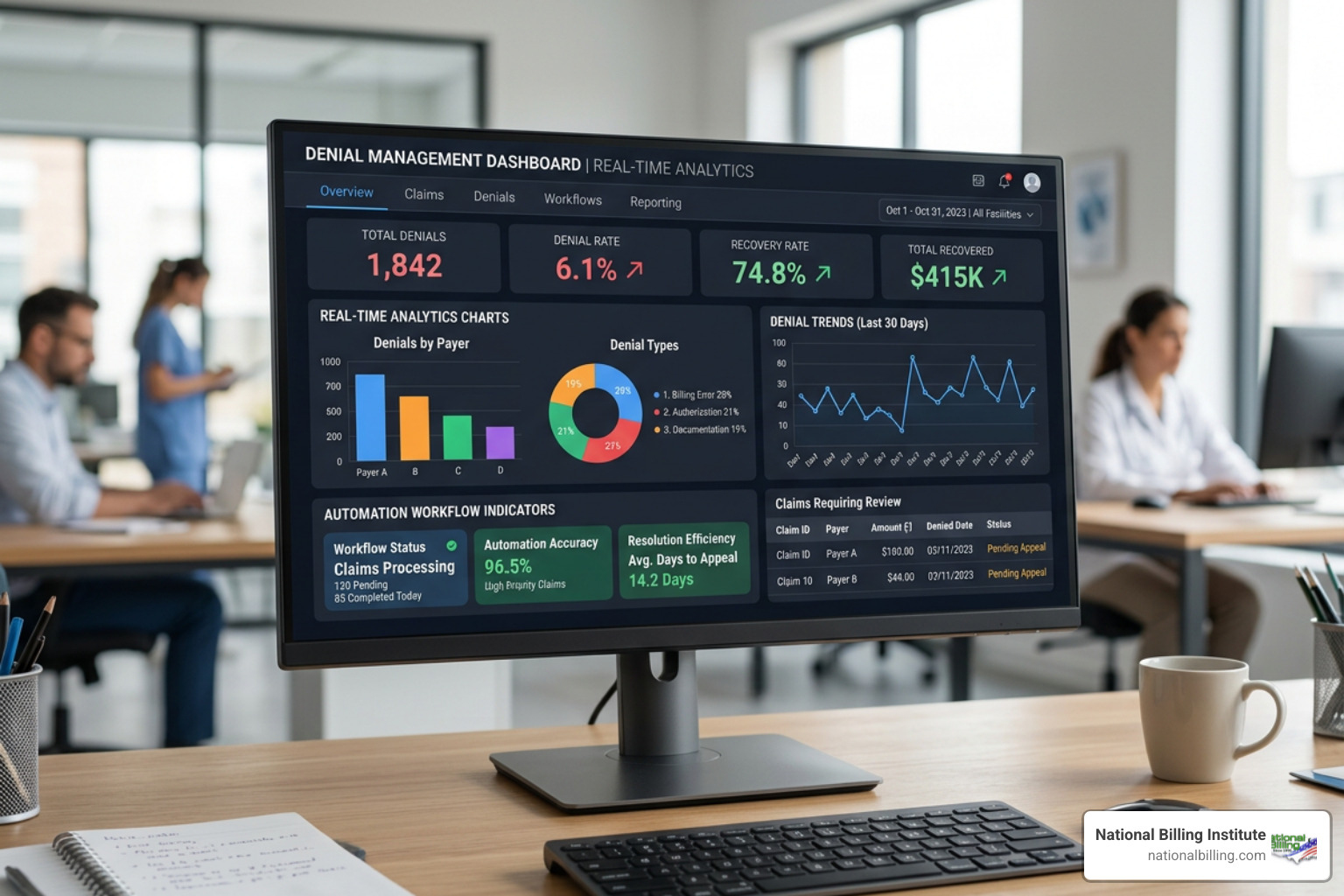
When evaluating healthcare denial management systems, look for features that eliminate manual administrative burdens. The best platforms offer:
Automated Appeal Generation: Software that pulls clinical documentation and automatically populates payer-specific appeal letters.
Root Cause Analysis: Advanced dashboards that group denials by code, provider, or payer to identify systemic issues.
Payer Policy Intelligence: Built-in databases that keep up with constantly changing insurance policies and filing deadlines.
To illustrate how much of a game-changer this is, let's compare a manual workflow with an automated one:
Workflow Step Traditional Manual Process Automated System Process Denial Ingestion Staff manually reads paper EOBs or parses electronic remits. AI-powered parsing categorizes and routes denials instantly. Prioritization Worklists sorted by claim age or dollar amount manually. Predictive analytics prioritizes claims by likelihood of recovery. Appeal Preparation Billing staff drafts letters from scratch (takes 1-4 hours). Generative AI creates complete appeal packages in minutes. Tracking Manual spreadsheets; high risk of missing timely filing deadlines. Built-in statutory clocks and automated proof-of-delivery tracking.
Managing this transition smoothly is the core of effective Denials And Appeals Management.
Integrating Healthcare Denial Management Systems with EHRs
A denial management system is only as good as its connection to your core technology. If your staff has to jump between your Electronic Health Record (EHR), Practice Management (PM) system, and a standalone denial tool, productivity will plummet.
Seamless integration ensures that clinical documentation, demographic data, and billing history flow freely between systems. Whether you are using a large-scale Hospital Information System (HIS) or a specialized PM platform, robust API connectivity allows for real-time data exchange. This tight integration is the foundation of modern Rcm Denial Management.
AI and Automation in Modern Workflows
Artificial intelligence is no longer a futuristic buzzword—it is the backbone of efficient revenue cycles in 2026. Generative AI can autonomously draft highly targeted appeal letters by linking clinical evidence directly to the payer's specific medical policies.
Furthermore, intelligent task routing ensures that straightforward denials are handled automatically, while complex clinical appeals (like DRG downgrades or medical necessity disputes) are routed to the right human specialist. By utilizing AI-driven Denial Management Services, organizations can dramatically reduce staff burnout and ensure no claim is left behind.
Key Metrics to Measure Revenue Cycle Success
You cannot manage what you do not measure. To justify your investment in a denial management platform, you must establish clear baselines and track performance over time.
Essential KPIs for Revenue Cycle Management
To gauge the health of your billing operations, your team should monitor several key performance indicators (KPIs) closely:
Clean Claims Rate (CCR): The percentage of claims that pass all edits and are accepted on the first submission. Your target should be 98% or higher.
Initial Denial Rate: The percentage of claims denied upon first adjudication. A healthy target is under 5%, though the industry average often hovers around 10%.
Appeal Success Rate: The percentage of appealed claims that are successfully overturned and paid. You should aim for 60% or higher.
Days in Accounts Receivable (A/R): The average number of days it takes to collect payments. Keeping this under 30 days is ideal for healthy cash flow.
Understanding these metrics is the first step in mastering What Is Denial Management In Medical Billing.
Calculating ROI and Financial Recovery
The return on investment for denial management software is highly measurable. For example, organizations using AI-driven denial management see an average of $2.8 million in annual recovery improvements and a 70% reduction in appeal preparation time.
Additionally, reducing self-pay aging and lowering your overall cost to collect directly impacts your bottom line. Investing in Denial Management In Medical Billing isn't just about recovering lost dollars; it's about optimizing your entire operational overhead so your staff can focus on patient care instead of administrative paperwork.
Frequently Asked Questions About Denial Management
What is the average claim denial rate in healthcare?
The average claim denial rate in healthcare typically falls between 5% and 15%, with the industry average sitting right around 10%. However, certain payers—particularly Medicare Advantage and managed Medicaid plans—frequently exhibit much higher denial rates. Keeping your rate below 5% is critical to avoiding cash flow bottlenecks, which is why understanding the root causes of Medical Billing Denials is so important.
How does AI improve the appeal success rate?
AI improves the appeal success rate by eliminating guesswork. Instead of using generic templates, generative AI reviews the exact denial code, cross-references it with the payer's current medical policy, and pulls supporting clinical evidence directly from the EHR. This results in highly persuasive, compliant appeal packages and a 45% improvement in overall appeal success rates. Leveraging these technologies is a core focus of modern Denials Management Healthcare.
Can healthcare denial management systems prevent denials before submission?
Absolutely. The most effective systems focus heavily on prevention. By using real-time EDI transactions (270/271) for immediate eligibility verification at the time of booking, and running claims through robust pre-submission scrubbing engines, these platforms catch registration errors, missing prior authorizations, and coding mismatches before the claim ever reaches the payer.
Conclusion
Choosing the right denial management system is one of the most impactful decisions you can make for your practice's financial health in 2026. Whether you opt for an AI-powered software platform or choose to partner with an expert team to handle it for you, the goal remains the same: stop letting hard-earned revenue slip through the cracks.
At National Billing Institute, we combine the power of advanced, AI-automated claims processing with the touch of our 100% USA-based team in Boca Raton, FL. With over 30 years of industry experience, we help healthcare providers maintain the lowest denial rates in the industry, achieve full HIPAA compliance, and realize a 15-30% average increase in revenue.
Ready to eliminate billing headaches and maximize your collections? Contact our team today to explore how our National Billing Services can optimize your workflow and secure the revenue your practice deserves.
