
The Complete Guide to Medical Billing Software
What Is Medical Billing Software (And Do You Really Need It)?
Medical billing software is a specialized digital tool that automates how healthcare practices submit insurance claims, track payments, and manage their revenue cycle — from the moment a patient checks in to the moment a claim is paid.
Quick answer for busy providers:
What it does Why it matters Submits electronic claims to insurers Faster reimbursements, less paperwork Scrubs claims before submission Fewer denials, higher first-pass rates Tracks payments and A/R Less revenue leakage Verifies patient eligibility Catches coverage issues upfront Generates financial reports Better decisions, easier audits Maintains HIPAA compliance Reduces costly violation risks
If your practice is dealing with high claim denial rates, slow reimbursements, or mounting administrative work, the right billing software — or a billing partner using it — can make a significant difference.
The reality is that medical billing has grown far more complex over the past decade. Payer rules change constantly. Coding errors trigger costly denials. And manual processes leave real money on the table. According to industry data, practices that switch to optimized billing solutions routinely see collections increase by 15–30%.
I'm Olivia Harper, founder of National Billing Institute and a denial management and reimbursement specialist with over 30 years of hands-on experience in medical billing software and revenue cycle management. In this guide, I'll walk you through everything you need to know to make smart, informed decisions about your billing operations.
Understanding Medical Billing Software and How It Works
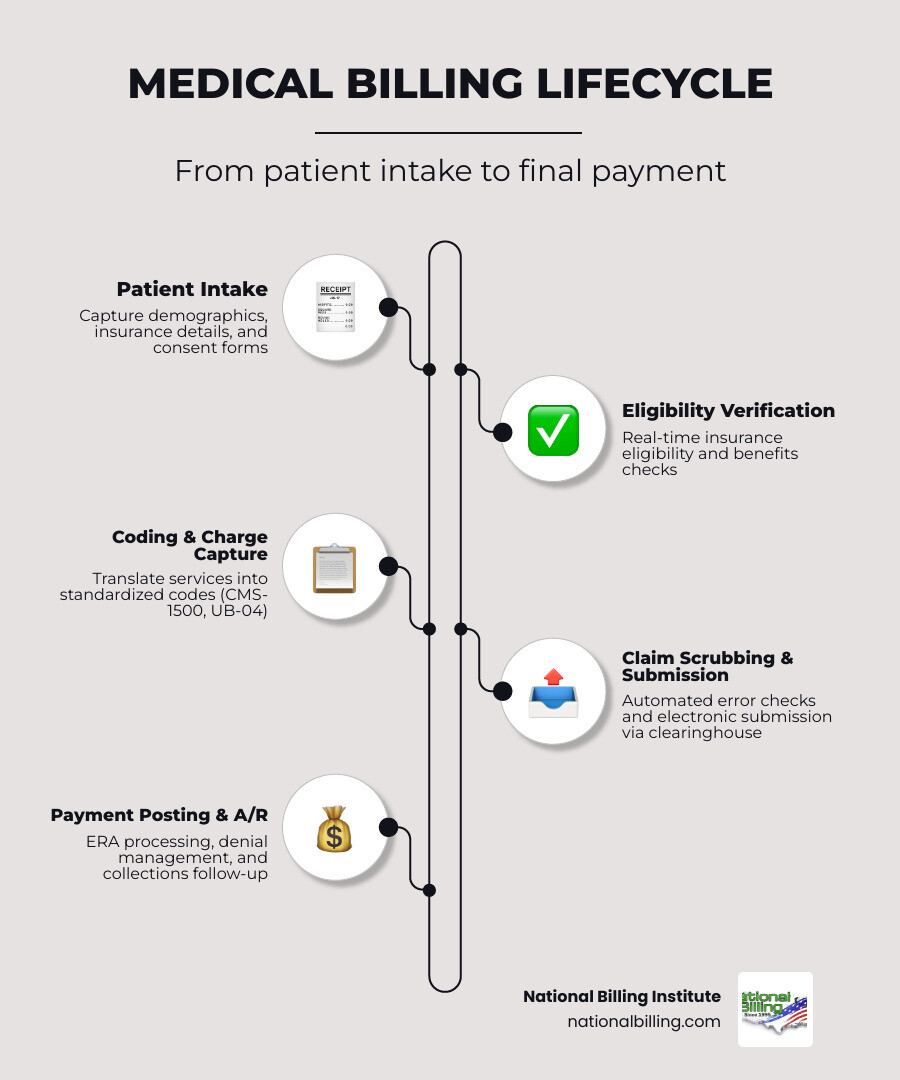
At its core, medical billing software serves as the bridge between the clinical encounter and the financial reimbursement. In May 2026, manual paper claims are a relic of the past. Modern systems function by translating healthcare services into standardized codes and transmitting them as electronic claims to insurance payers.
The process begins with Medical Billing data entry, where patient demographics and insurance details are captured. The software then utilizes a "claim scrubbing" engine. This is a critical step where the system checks the claim against thousands of payer-specific rules to identify errors before the claim ever leaves your office. Once "clean," the claim is sent via a Claims Processing Software Healthcare integration to a clearinghouse.
A clearinghouse acts as a middleman, formatting the data to meet the specific requirements of different insurance companies (like Medicare or private carriers). Once the payer processes the claim, the software handles automated payment posting. This means that when an Electronic Remittance Advice (ERA) is received, the system automatically applies the payment to the correct patient account, drastically reducing the need for manual data entry.
Professional vs. Institutional Medical Billing Software
Not all billing is created equal. The industry generally divides software into two camps: professional and institutional.
Professional Billing: This is used by individual healthcare professionals and small-to-mid-sized ambulatory care practices. It typically focuses on the CMS-1500 form, which is the standard claim form for outpatient services and physician visits.
Institutional Billing: This is designed for facility billing, such as hospitals, nursing homes, and rehab centers. These organizations use the UB-04 form. Institutional software must handle complex "room and board" charges and multi-departmental billing that a standard outpatient practice wouldn't encounter.
Choosing a system that understands these specific payer rules is vital for ensuring your claims aren't rejected simply because they were submitted on the wrong "paperwork."
Closed, Open, and Isolated Systems
When we look at how data moves, we categorize medical billing software into three types of systems:
Closed Systems: These are the "old school" approach where data is confined to a single provider or practice. There is very little data exchange with outside entities.
Open Systems: These prioritize interoperability. They allow for the seamless exchange of information between different providers, labs, and pharmacies. This is often achieved through deep Types of EHR Systems integration and participation in Health Information Exchanges (HIE).
Isolated Systems: Also known as hybrid systems, these allow a practice to maintain their own proprietary network while still being able to communicate with specific external partners for things like electronic prescriptions or lab results.
Key Features and Benefits of Modern Billing Systems
As we move through 2026, the "must-have" list for medical billing software has evolved. It’s no longer just about sending a claim; it’s about intelligent automation.
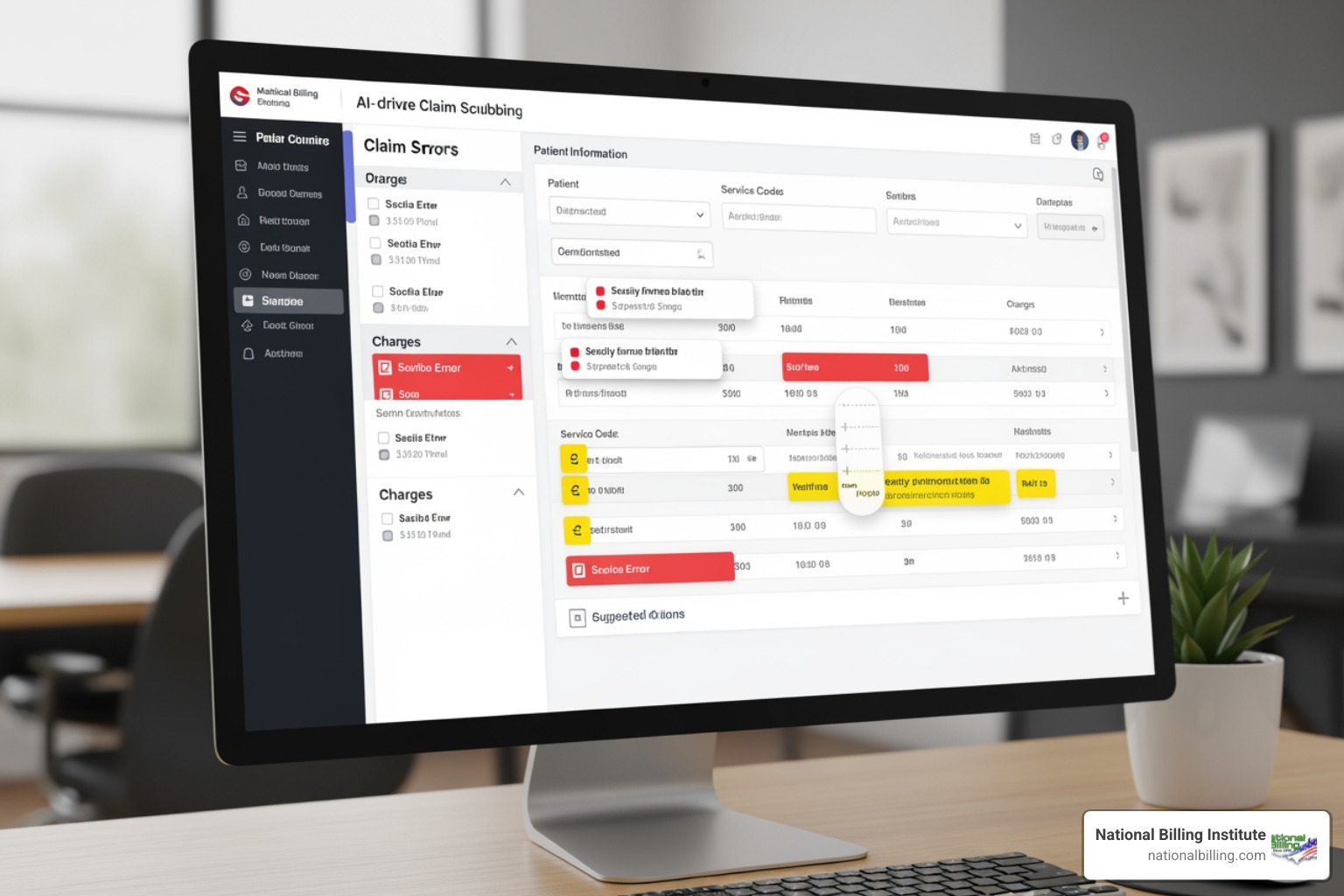
One of the most transformative features is AI in Healthcare Claims Processing. AI now powers sophisticated denial management tools that can predict which claims are likely to be rejected before they are sent.
Other essential features include:
Real-time Eligibility Verification: Instantly checking if a patient's insurance is active before they see the doctor.
KPI Dashboards: Providing a bird’s-eye view of your practice’s financial health, including A/R aging and collection rates.
Patient Portals: Allowing patients to view balances and pay bills online, which significantly boosts collection speeds.
ERA Processing: Digitizing the "Explanation of Benefits" (EOB) process so your staff doesn't have to manually type in payment amounts.
Enhancing Efficiency with Medical Billing Software
The primary goal of Automated Revenue Cycle Management is to get you paid faster. By automating the tedious parts of the workflow, practices see massive productivity gains.
Error reduction is perhaps the biggest benefit. When software "scrubs" a claim, it catches missing modifiers or mismatched diagnosis codes that would otherwise result in a denial. This leads to a higher first-pass acceptance rate, meaning more of your claims are paid on the first try. In an era where every dollar counts, reducing the time spent on "re-work" is the fastest way to increase your bottom line.
Reporting, Analytics, and Compliance Features
You can't manage what you can't measure. Modern systems offer robust financial reporting that tracks every penny. They also include compliance features such as audit trails — which record who accessed what data and when — to satisfy HIPAA requirements.
With the rise of value-based care, Features of EHR and billing integrations now include MIPS compliance tracking. This ensures that you are meeting the quality reporting standards required to avoid Medicare penalties. Some high-end systems even use predictive intelligence to flag potential audits or identify payers who are consistently slow to pay.
Medical Billing Software vs. Revenue Cycle Management (RCM)
We often get asked: "Is billing software the same as RCM?" The answer is no, though they are closely related.
Think of medical billing software as the tool, while Revenue Cycle Management (RCM) is the entire process. Revenue Cycle Management Solutions encompass everything from the initial patient intake and front-office workflows to the final collection of a past-due balance.
Feature Standalone Billing Software Full-Cycle RCM Claim Submission Yes Yes Payment Posting Yes Yes Patient Registration Limited Comprehensive Denial Management Manual Tools AI-Automated Workflows Patient Collections Basic Statements Full Follow-up Services Financial Strategy You analyze the data Experts optimize your revenue
RCM software often includes advanced features like patient responsibility estimation, which tells the front desk exactly what to collect as a copay or deductible at the time of service. It also handles sophisticated charge capture, ensuring that no billable service performed by the physician is forgotten.
Supporting Diverse Billing Methods
The healthcare landscape is shifting away from traditional models. Your software needs to be flexible enough to handle:
Fee-for-Service: The standard "pay per visit" model.
Capitation: Where providers are paid a set amount per patient, regardless of how many times they are seen.
Value-Based Care: Where reimbursements are tied to patient outcomes.
Concierge Medicine: Handling monthly or annual membership fees.
Supporting these specialty-specific workflows requires high-complexity logic that older, "legacy" systems simply cannot provide.
Choosing the Best Medical Billing Software for Your Practice
Selecting the right system is a long-term commitment. One of the first decisions you'll face is Cloud Based Medical Billing Software versus on-premise solutions.
In 2026, the industry has almost entirely moved to the cloud. Web Based Medical Billing offers superior scalability, allowing you to add new locations or providers without buying new servers. It also ensures that your software is always up-to-date with the latest HIPAA security patches.

When evaluating vendors, look for:
Integration: Does it work with Certified EHR Systems? Bi-directional integration is key — you want data to flow from the clinical note directly into the billing system without double entry.
Usability: If the interface is too complex, your staff will find workarounds that lead to errors.
Vendor Support: Is the support team based in the USA? Do they understand the nuances of your specific specialty?
Implementation Timelines: How long will it take to get your team trained and your data migrated?
Frequently Asked Questions about Medical Billing Software
What are the hidden costs of free medical billing software?
While "free" sounds appealing, it often comes with significant hidden costs. These systems frequently lack robust technical support, leaving you stranded if the system goes down. You may also encounter high integration fees to connect to your EHR, or transaction fees for every claim you send. Most importantly, free software may have lower security standards, putting you at risk for HIPAA violations that can cost tens of thousands of dollars.
How does software improve first-pass claim acceptance rates?
Software improves these rates through real-time scrubbing. By checking the claim against a database of millions of payer rules, the system flags errors (like an invalid ICD-10 code or a missing modifier) before the claim is submitted. Automated eligibility checks also ensure the patient’s insurance is active, preventing denials before the visit even begins.
Can billing software integrate with any EHR?
Most modern systems are built with HL7 compliance and robust API ecosystems, allowing them to "talk" to a wide variety of EHRs. However, the depth of that integration varies. A "unified platform" where the EHR and billing software are built by the same company usually offers the smoothest data synchronization, but bi-directional interfaces can still provide high efficiency between different vendors.
Conclusion
The right medical billing software is the engine that drives your practice's financial growth. Whether you choose to manage your billing in-house with a powerful software suite or partner with a professional service, the goal remains the same: reducing administrative burdens so you can focus on patient care.
At National Billing Institute, we combine 30+ years of experience with cutting-edge, AI-automated technology to ensure our clients achieve the lowest denial rates in the industry. Our 100% USA-based team in Boca Raton, FL, is dedicated to helping practices see a 15-30% revenue increase through optimized billing workflows and full HIPAA compliance.
Ready to stop chasing payments and start growing your practice? More info about medical billing services is just a click away. Let us help you turn your billing cycle into a predictable, high-performing asset.
