
Stop the Bleeding with Professional Healthcare Revenue Cycle Services
Is Your Practice Losing Money Without Knowing It?
Healthcare RCM services — or Revenue Cycle Management services — are the end-to-end financial processes that move a healthcare practice from patient scheduling all the way through final payment collection. If you're evaluating whether to outsource, here's what you need to know at a glance:
What RCM Services Cover Why It Matters Patient registration & insurance verification Prevents denials before they start Medical coding (ICD-10, CPT, HCPCS) Ensures accurate, compliant reimbursement Claims submission & scrubbing Maximizes first-pass acceptance rates Denial management & appeals Recovers revenue that would otherwise be lost Payment posting & A/R follow-up Keeps cash flow moving Patient billing & collections Captures remaining balances
The bottom line: Outsourcing to a professional RCM partner typically delivers a 15–30% increase in collections, faster payments, and fewer denials — while freeing your clinical staff to focus on patients.
Most healthcare practices are losing revenue right now and don't realize it. Claims get denied. Coding errors slip through. Insurance eligibility goes unverified. Each gap is a dollar that never reaches your bank account.
The problem isn't always effort. It's that running a tight revenue cycle requires coordinating a dozen complex workflows simultaneously — all while keeping up with constantly changing payer rules, coding updates, and HIPAA regulations. For most practices, that's simply too much to manage well in-house.
That's why more providers are turning to professional healthcare RCM services to stop the financial bleeding and reclaim revenue they've already earned.
I'm Olivia Harper, Founder and Denial Management & Reimbursement Specialist at National Billing Institute, and over my 30+ years managing healthcare RCM services from our 100% US-based office in Boca Raton, Florida, I've seen how the right RCM partner can transform a struggling practice into a financially healthy one. In this guide, I'll walk you through everything you need to evaluate your options and make a confident decision.
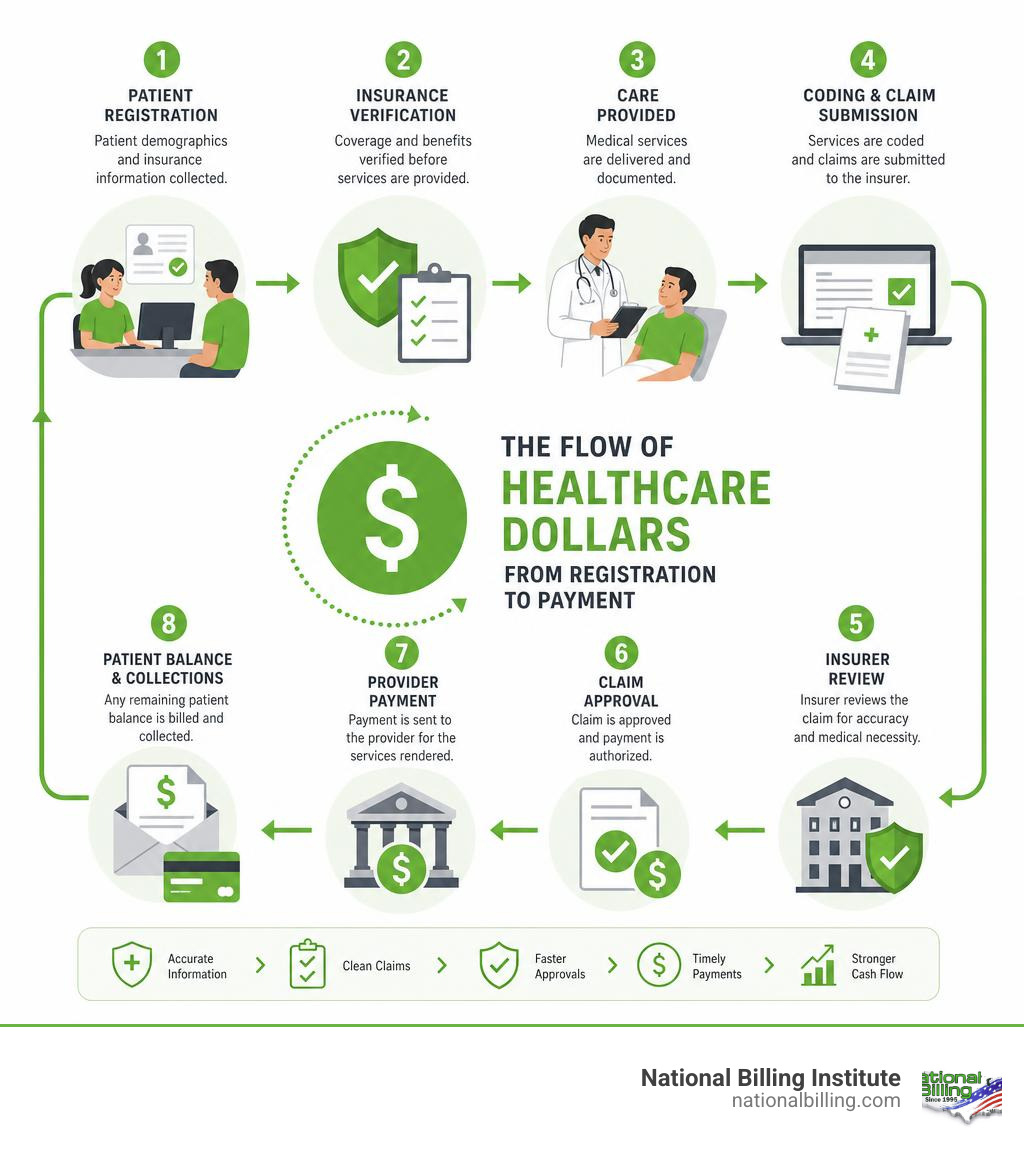
The Critical Role of Professional Healthcare RCM Services in Modern Medicine
In the complex landscape of modern medicine, providing exceptional clinical care is only half the battle. The other half is ensuring your practice remains financially viable. This is where Revenue Cycle Management Healthcare becomes absolutely vital.
Every time a clinician sees a patient, a highly structured sequence of financial events is set in motion. If any link in this chain breaks, your cash flow stalls. Professional healthcare RCM services act as the glue holding this chain together. By bridging the gap between clinical documentation and financial reimbursement, RCM services ensure that healthcare organizations maintain steady cash flow, avoid administrative burnout, and protect their bottom line.
Without a dedicated strategy, administrative burdens can quickly overwhelm your front-desk and clinical teams. Doctors should be focusing on patients, not spending their evenings wrestling with complex payer rules or chasing down unpaid invoices.
What to Expect from End-to-End Healthcare RCM Services
When you partner with a comprehensive provider, you aren't just hiring a remote billing department; you are implementing full Healthcare Revenue Cycle Management Solutions. An end-to-end RCM service handles every single touchpoint of the patient's financial journey:
Patient Access: Verifying insurance eligibility and securing prior authorizations before the patient even steps foot in your office.
Medical Coding: Translating complex clinical notes into precise ICD-10, CPT, and HCPCS codes.
Claims Submission: Electronically transmitting clean, pre-scrubbed claims to clearinghouses and payers.
Denial Management: Rapidly identifying, correcting, and appealing any claims that payers reject or deny.
Patient Collections: Creating transparent, easy-to-understand statements and managing patient payment portals.
By connecting these workflows, an end-to-end provider eliminates the communication gaps that naturally occur when you use piecemeal software or disconnected vendors.
Evaluating the Cost-Benefit of Outsourced Healthcare RCM Services
Many practice managers ask: Should we keep our billing in-house, or is it time to outsource?
Managing your billing in-house often seems like the safer, more controllable option. However, once you calculate the true overhead costs, the math quickly shifts. In-house billing requires paying competitive salaries, providing employee benefits, purchasing expensive practice management software, and continuously training staff on annual coding updates.
Furthermore, the ongoing healthcare staffing shortage means that if your primary biller leaves or goes on vacation, your billing cycle halts immediately.
By choosing Outsourced Medical Billing Services in USA, you trade unpredictable overhead for a scalable, variable cost model. Most outsourced partners charge a percentage of collected revenue, meaning they only succeed when you succeed. This financially aligns your partner to chase down every single dollar, leading to significantly higher net collection rates and a massive reduction in days in accounts receivable (A/R).
The Seven Key Stages of the Healthcare Revenue Cycle
To truly understand how professional healthcare RCM services optimize your practice, we must break down the seven distinct stages of the revenue cycle.
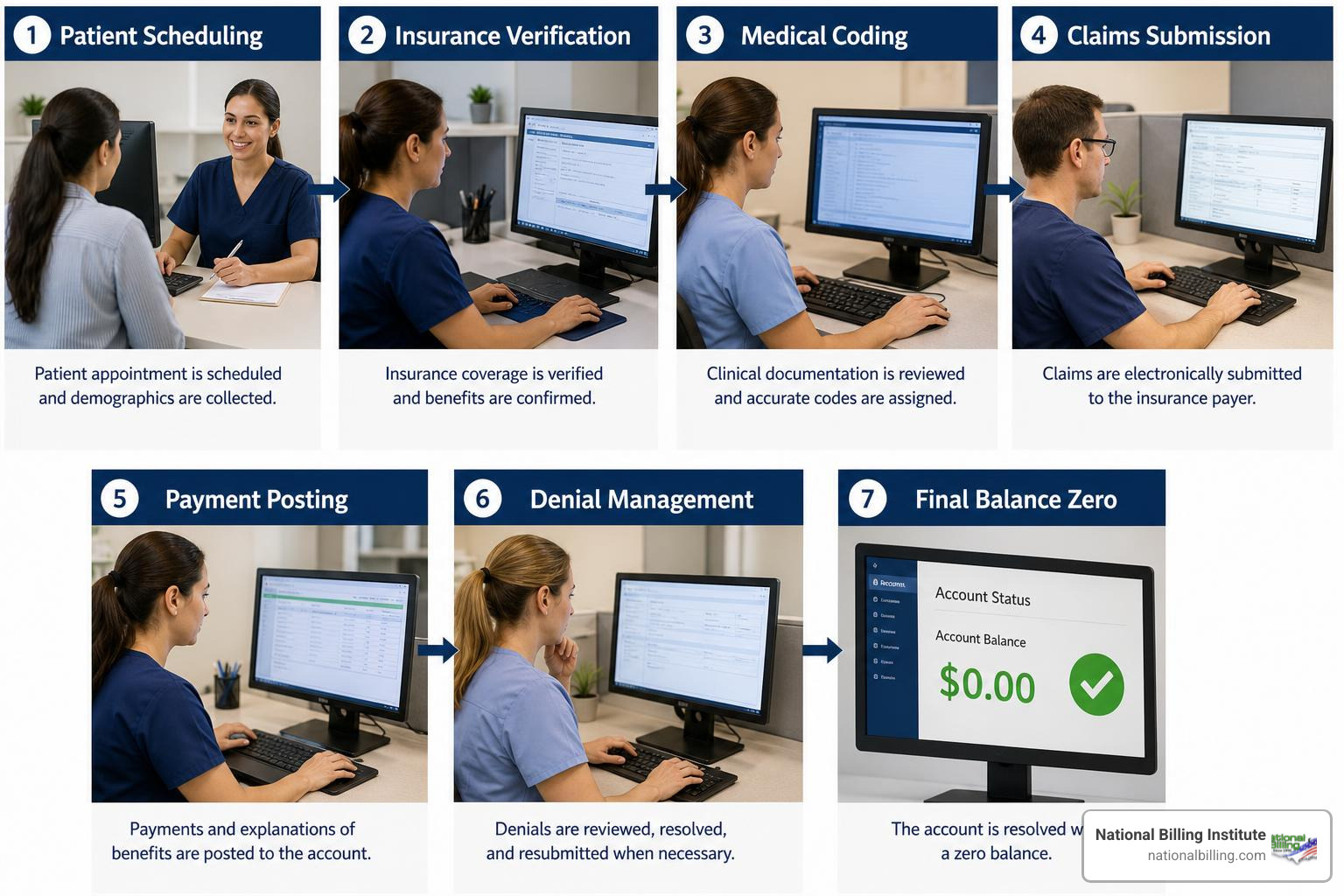
Every successful payment is the result of executing these stages in perfect harmony. Let's look at how a comprehensive partner manages these Revenue Cycle Operations to prevent revenue leakage at every turn.
Front-End Access: Registration and Insurance Verification
The revenue cycle begins long before the provider enters the exam room. In fact, the front-end phase is where the vast majority of claim denials are born.
During patient registration, our team captures essential demographic data and insurance details. Through real-time eligibility verification, we confirm that the patient's policy is active, verify what benefits are covered, and calculate the patient's copay or deductible responsibility.
Additionally, we secure necessary prior authorizations for specialized procedures. Getting this right on day one dramatically reduces front-end denials and improves the overall patient financial experience.
Mid-Cycle Accuracy: Medical Coding and Charge Entry
Once the clinical encounter is complete, the mid-cycle phase begins. This is where clinical documentation is translated into standardized codes.
Our certified coders review clinical charts to assign highly accurate ICD-10, CPT, and HCPCS codes. Precision in RCM Medical Coding is critical; even a minor oversight can lead to an immediate claim rejection or underpayment.
Once coded, we perform charge entry, ensuring that all billable services are fully captured and aligned with the provider’s documentation so that no revenue is left on the table.
Back-End Resolution: Claims Submission and Denial Management
The final phase is where claims are prepared, submitted, and resolved. Before any claim is sent to a payer, it undergoes a rigorous process called "claim scrubbing." This automated rule-checking process identifies potential errors—such as missing modifiers or mismatched gender codes—before transmission.
If a claim does bypass the clearinghouse and gets denied by a payer, our dedicated Denials and Appeals Management team steps in. Rather than letting unpaid claims sit in A/R, we perform a thorough root-cause analysis, correct the underlying issues, and submit aggressive appeals to secure the reimbursement you deserve.
How AI and Automation are Revolutionizing Claims Processing
The days of manually printing, sorting, and mailing paper claims are long gone. Today, the most successful RCM strategies rely heavily on advanced technology.
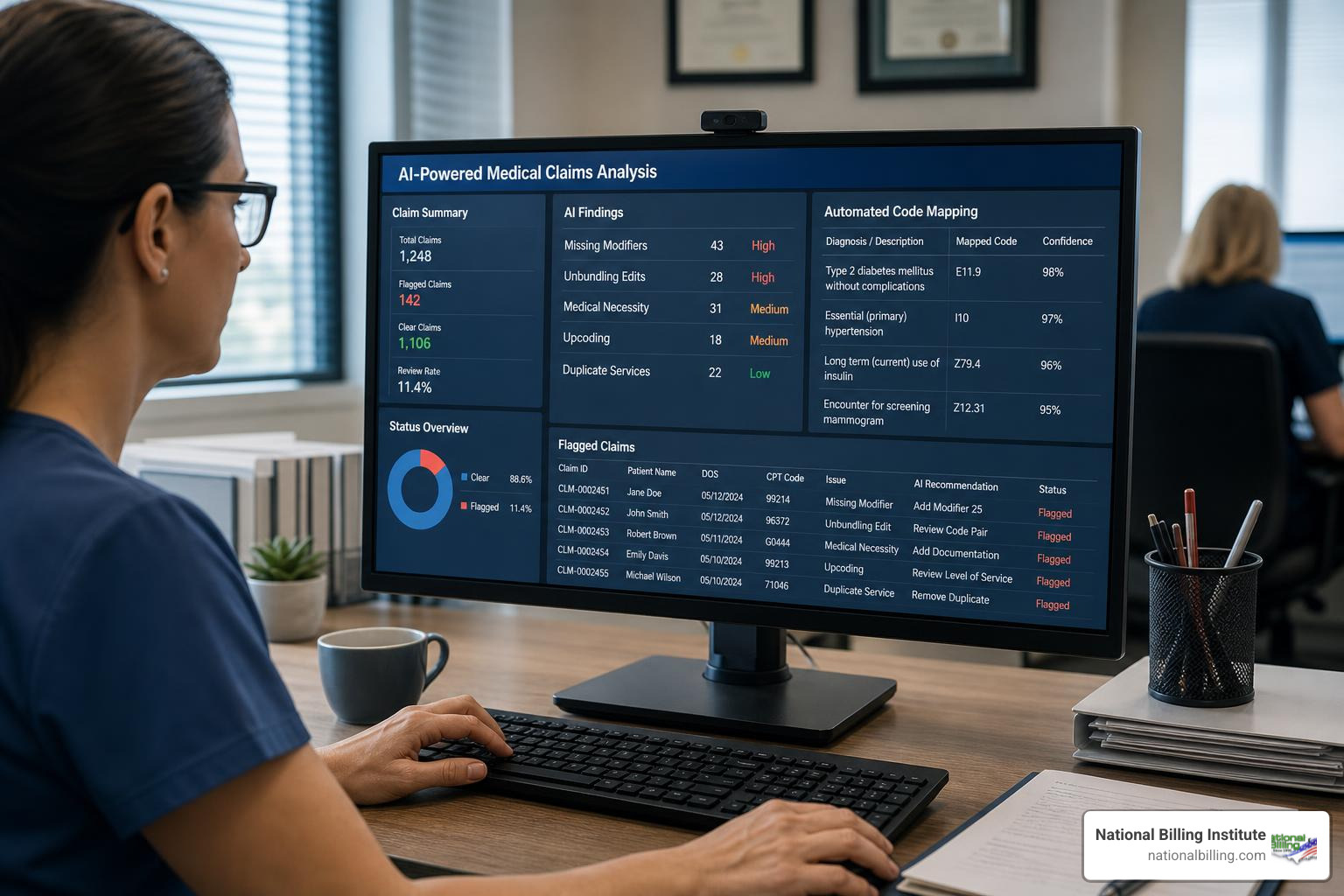
By implementing Automated Revenue Cycle Management, healthcare organizations can process massive volumes of transactions with unprecedented speed and accuracy.
Modern AI engines use machine learning to predict payer behavior. For instance, by analyzing historical data across millions of claims, an intelligent RCM platform can identify patterns in how specific payers deny claims. If a major payer suddenly changes its filing requirements, the AI adapts instantly, updating the claim-scrubbing rules to prevent a wave of administrative denials.
Furthermore, "Agentic AI" is now capable of automating repetitive, low-touch tasks. This includes instantly converting paper Explanation of Benefits (EOBs) into digital Electronic Remittance Advices (ERAs), verifying real-time eligibility at midnight, and generating comprehensive appeal letters with a single click.
By allowing AI to handle the predictable, high-volume workflows, human billing experts are freed up to focus their attention on complex, high-value appeals that require clinical judgment.
Key Metrics and KPIs for Measuring RCM Success
You cannot manage what you do not measure. To evaluate the health of your revenue cycle, you must track key performance indicators (KPIs) consistently.
By working with an Expert Billing Team that prioritizes the Lowest Error Rates Billing, you can benchmark your practice against national standards to see exactly where you stand.
Here are the four primary metrics we monitor to ensure your financial health:
Clean Claim Rate (CCR): The percentage of claims that are accepted and paid on the very first submission. Top-tier RCM performance targets a CCR of 95% or higher.
Days in A/R (Average Days Outstanding): The average number of days it takes for your practice to get paid after a service is rendered. The industry standard is to keep this under 30 days.
Denial Rate: The percentage of submitted claims that are denied by payers. A healthy, optimized revenue cycle maintains a denial rate below 5%.
Net Collection Rate (NCR): The percentage of collectable revenue (after contractual adjustments) that your practice actually recovers. A successful RCM partner should achieve an NCR of 98% to 99%.
Metric Industry Average Top-Tier Target (National Billing) Clean Claim Rate 75% – 80% 95% – 98%+ Days in A/R 40 – 50 Days Under 30 Days Claim Denial Rate 10% – 15% Below 5% Net Collection Rate 92% – 95% 98% – 99%
Ensuring Compliance and Security in Medical Billing
In the medical industry, data security is non-negotiable. Because healthcare RCM services handle highly sensitive Protected Health Information (PHI), maintaining strict Medical Billing HIPAA Compliance is our top priority.
A reputable RCM partner must implement comprehensive administrative, physical, and technical safeguards. This includes end-to-end data encryption, multi-factor authentication, secure cloud hosting, and routine security audits.
Furthermore, RCM providers should align their workflows with established frameworks such as SOC 2 Type II and HITRUST to ensure maximum data protection.
By working with a fully compliant, domestic team, you protect your practice from the catastrophic financial and reputational damage of a data breach. You can read more about national compliance standards directly from the official HIPAA Regulations portal.
Frequently Asked Questions about Revenue Cycle Management
What is the difference between medical billing and RCM?
While medical billing is a crucial component of the process, it is only one piece of the puzzle. Medical billing focuses primarily on creating and submitting claims and sending patient statements.
In contrast, Revenue Cycle Management (RCM) is a holistic approach that encompasses the entire patient financial lifecycle—from the moment a patient schedules an appointment (front-end registration and eligibility checks) through clinical documentation and coding (mid-cycle) to back-end claims resolution, denial management, and detailed financial reporting.
How does outsourcing RCM reduce claim denials?
Outsourcing to a professional provider reduces denials through a combination of certified expertise and predictive technology.
By utilizing Denial Reduction Services, RCM partners deploy certified medical coders to eliminate coding errors, use advanced claim-scrubbing software to catch mistakes before submission, and leverage AI to analyze payer denial patterns in real time. This proactive approach ensures that only clean, compliant claims are sent to insurance companies.
What specialties benefit most from specialized RCM?
Virtually every medical specialty benefits from specialized RCM, but those with highly complex billing rules see the most dramatic improvements. This includes:
Cardiology and Orthopedics: Due to high-ticket procedures and strict prior authorization requirements.
Pediatrics and Family Medicine: Due to high patient volumes and frequent preventive care coding nuances.
Urgent Care: Where rapid patient turnover requires real-time eligibility verification.
Mental and Behavioral Health: Which often involves complex, ongoing therapy pre-authorizations and varied session limits.
Conclusion
Running a successful medical practice in 2026 requires a delicate balance of clinical excellence and operational efficiency. You shouldn't have to sacrifice your time, your staff's sanity, or your hard-earned revenue to complex administrative hurdles.
At National Billing Institute, based in sunny Boca Raton, Florida, we are proud to offer a 100% USA-based team with over 30 years of hands-on experience in optimizing healthcare revenue. Our unique combination of advanced AI-automated claims processing, certified coding precision, and aggressive denial management has helped our clients achieve the lowest denial rates in the industry and a 15% to 30% average increase in revenue.
If you are ready to stop the financial bleeding and see what a truly optimized revenue cycle looks like, we invite you to explore our comprehensive Services or contact our team today to schedule your custom billing review. Let us handle the business of medicine so you can focus on the joy of healing.
