
The Best Services for Modern American Medical Practices
Why the Right Services Make or Break a Modern American Medical Practice
Serving USA medical practices in 2026 means navigating one of the most complex — and high-stakes — business environments in the country. Here is a quick overview of the key services modern practices rely on:
Service Category What It Covers Medical Billing & RCM Claims submission, denial management, collections, cash flow Practice Startup Support Feasibility studies, credentialing, financing, EHR setup Compliance Management HIPAA, OSHA, CLIA, state medical board requirements HR & Staffing Recruiting, onboarding, training, retention Technology & EHR Cloud-based systems, telehealth, patient engagement tools Marketing & Growth Branding, digital presence, patient acquisition Consulting & Advisory Strategy, payer negotiations, practice turnarounds
The US healthcare landscape is shifting fast. Nearly 74% of physicians were employed by hospitals or corporate entities in 2023 — yet a growing counter-movement of doctors is choosing independence. At the same time, 53% of physicians reported burnout, and practices face rising claim denial rates, tightening compliance rules, and razor-thin margins.
Getting the right support is not optional. Research shows that 84% of practice startups using an external advisor launched on time and on budget, compared to just 42% of those who went it alone.
I'm Olivia Harper, founder of National Billing Institute and a specialist in denial management and reimbursement with over 30 years of experience serving USA medical practices from our 100% in-office team in Boca Raton, Florida. In this guide, I'll walk you through the essential services that help American practices not just survive — but thrive.
The Landscape of Serving USA Medical Practices in 2026
The healthcare environment in May 2026 is a study in contradictions. While hospital consolidation continues to sweep the nation, the "independent movement" is gaining massive steam. Many physicians are weary of corporate quotas and are returning to private practice to reclaim their clinical autonomy.
Currently, about 55% of physicians still work in private practice settings. While this is a slight dip from a decade ago, the data shows a fascinating trend: large practices (those with 50 or more employees) have exploded by 162% over the last two decades. Meanwhile, small practices have seen a 16% decrease. This tells us that while doctors want independence, they are finding strength in numbers and sophisticated management structures.

Geography also plays a massive role in how we go about serving USA medical practices. In rural areas, the challenges are steep. Recruitment and retention are constant battles, leading many facilities to rely on physician staffing for rural areas to maintain continuity of care. Interestingly, states like Montana and North Dakota have seen some of the highest salary increases for physicians recently, proving that practicing in underserved areas can be both mission-driven and financially rewarding.
For those looking to navigate this shift, understanding physician employment trends and salary data is crucial. For instance, did you know that non-surgical physicians often earn up to 35% more in private practice than their hospital-employed counterparts? The financial incentive for independence is there, provided the practice is managed with precision.
Specialized Support for Serving USA Medical Practices
No two practices are identical. A solo practitioner in Boca Raton has vastly different needs than a multi-specialty group or an urgent care center in a busy metropolitan hub. When we talk about practice types we support, we have to look at the specific operational DNA of each:
Solo Practices: These require lean operations and high levels of automation to keep overhead low.
Group Clinics: These benefit from shared resources but require complex governance and advanced expert billing teams to handle high volume.
Urgent Care & Walk-in Clinics: These face unique challenges with "front-end" collections and high patient turnover.
Ambulatory Surgery Centers (ASCs): These have the highest compliance and equipment hurdles but offer significant revenue potential.
Technology Solutions Serving USA Medical Practices
In 2026, a "paper-based" practice is a dinosaur. To stay competitive, practices must leverage cloud-based EHR systems that allow for seamless data exchange. This isn't just about record-keeping; it's about revenue. Modern systems help close care gaps and ensure that every service provided is captured and billed correctly.
One of the biggest technological shifts we've seen is the normalization of USA telemedicine billing. Telehealth is no longer a "luxury" or a "pandemic-era temporary fix." It is a core service line that requires specialized coding knowledge to ensure reimbursements match in-person visit rates. By integrating these healthcare billing services, practices can expand their reach without increasing their physical footprint.
Essential Operational and Management Services
Running a medical practice is 20% medicine and 80% business management. This realization is often the "rude awakening" for many new practice owners. Managing vendors, negotiating leases, and overseeing a billing company relationship are tasks that don't get taught in medical school.

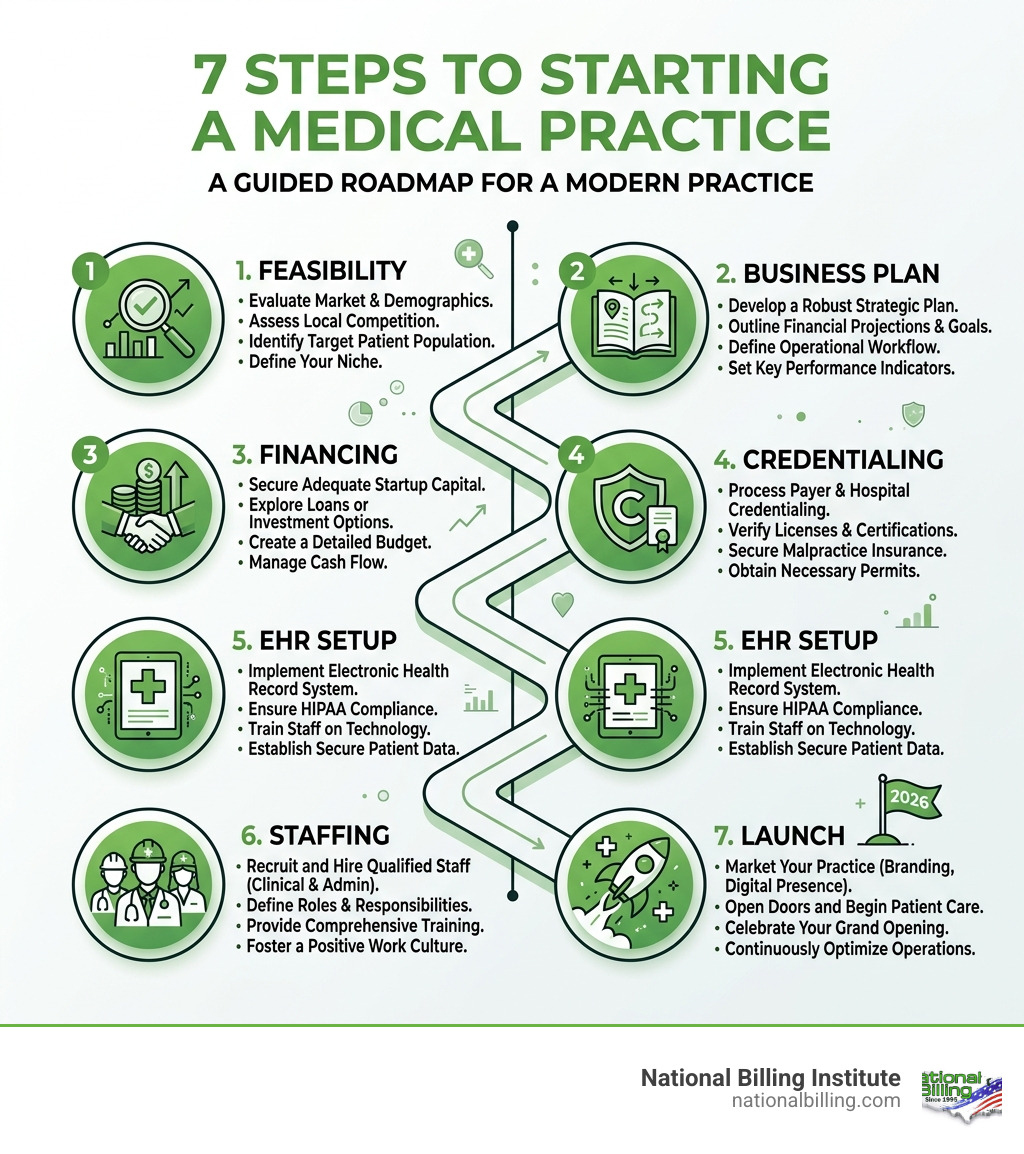
The most successful practices utilize comprehensive services for starting a practice that include feasibility studies. Before you sign a lease, you need to know if the local demographics can actually support your specialty. Once the doors are open, the focus shifts to staffing.
Staffing is often a practice's largest expense and its biggest headache. Employee turnover can cost a practice 25–30% of that employee's annual salary. This is why having a robust HR strategy — including clear policy manuals and ongoing training — is vital. Many practices find that the best medical billing services USA are those that act as an extension of their own team, reducing the administrative burden on in-house staff.
Administrative and HR Resources
Efficiency starts with the "onboarding" process. A new hire typically takes about a year to reach full performance potential. To bridge this gap, practices need standardized training modules. This is where outsourced medical billing services in USA become a strategic asset; by moving the complex billing and coding tasks off-site, your in-house team can focus on the patient experience.
Furthermore, practices must stay aware of broader regulatory bodies. While you focus on your local community, organizations like the Bureau of Medical Services handle health support for the diplomatic community, and state medical boards oversee your licensure. Staying in the loop with these entities ensures your practice remains in good standing.
Compliance and Revenue Cycle Management
Compliance is the "backbone" of your practice. Without it, you are one audit away from financial ruin. In 2023 alone, the HHS levied over $34 million in HIPAA penalties. By 2025, OSHA fines for serious violations reached over $15,000 per incident.
Managing these risks requires a HIPAA compliant USA team that understands the nuances of American privacy laws. It isn't just about "not sharing passwords"; it's about a culture of privacy that permeates every claim sent and every patient call answered.
Metric In-House RCM Outsourced RCM (National Billing) Average Denial Rate 10% - 15% Under 2% Cost of Training High (Continuous) Included in Service Compliance Risk Practice Assumes All Shared Liability / Expert Oversight Revenue Growth Stagnant 15% - 30% Increase
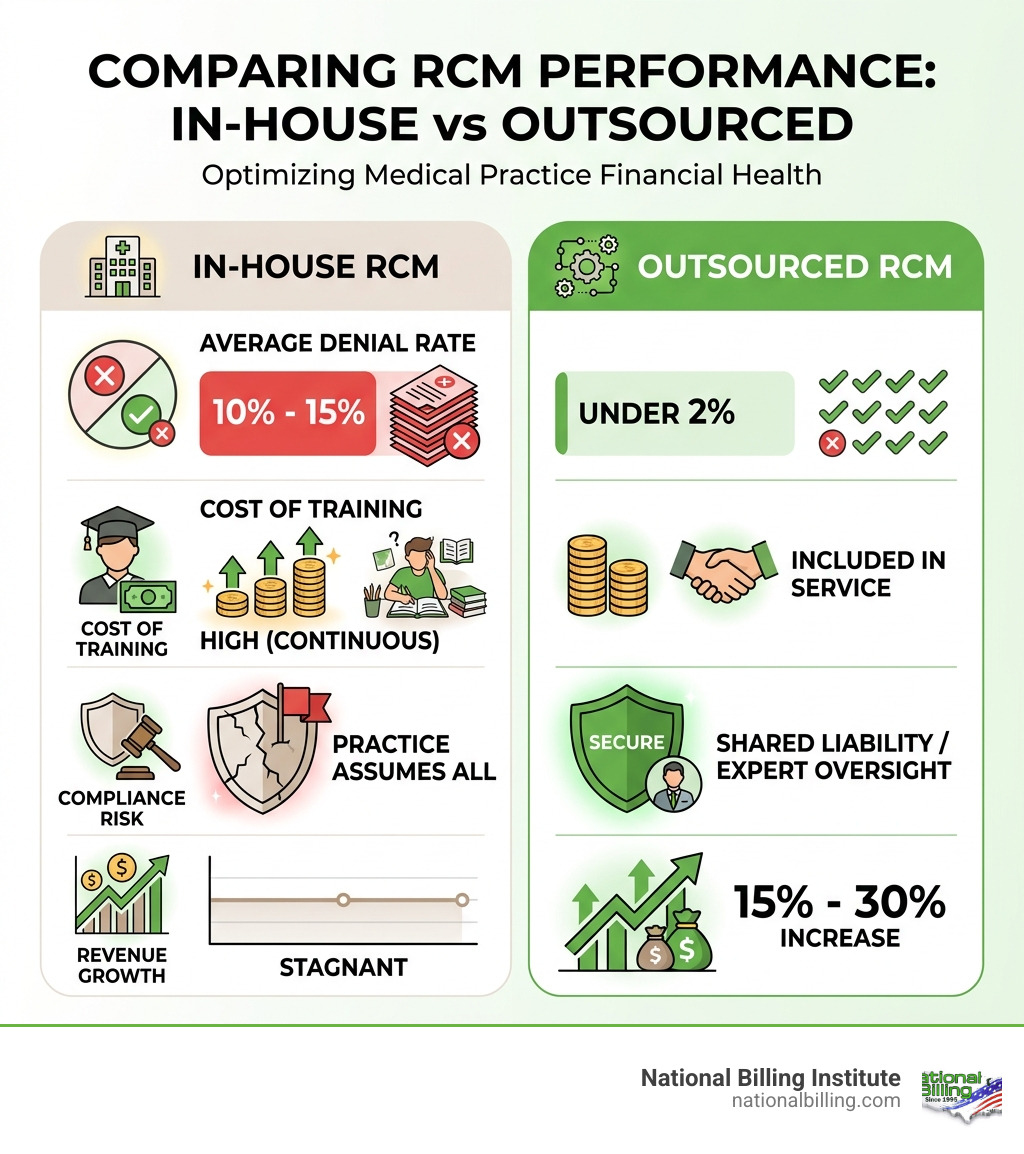
A dedicated RCM billing company does more than just "send bills." We perform aggressive denial management. In 2024, 60% of medical group leaders reported an increase in denial rates. We combat this by using AI-automated claims processing to catch errors before they ever reach the payer, ensuring your cash flow remains steady.
Financial Sustainability and Growth
Profitability in 2026 requires a multi-pronged approach. You cannot rely solely on standard insurance reimbursements. This is why many practices are exploring concierge medicine models or hybrid membership models. By charging a monthly or annual fee, practices can reduce their patient panels, spend more time with each individual, and create a predictable revenue stream that isn't dependent on the whims of insurance companies.
However, even for traditional models, maximizing every dollar is essential. This requires expert medical coding outsourcing companies in USA to ensure that you aren't "leaving money on the table" through under-coding or losing it to "clawbacks" through over-coding.
For those looking toward the end of their career, or perhaps an acquisition, medical practice brokerage info can help you understand the valuation of your "goodwill" and tangible assets. Whether you are starting up or winding down, the financial health of your practice is the ultimate metric of success.
Frequently Asked Questions about Medical Practice Services
How long does the insurance credentialing process take?
On average, the credentialing process takes 90 to 120 days per payer. However, in 2026, we are seeing some carriers take up to 6 months due to increased administrative backlogs. It is the single biggest "bottleneck" for new practices. We recommend starting this process the moment you have a business address and a tax ID.
What are the primary causes of medical claim denials in 2026?
The leading causes of denials today are:
Prior Authorization Issues: Payers are becoming stricter about what requires "the green light" before treatment.
Eligibility Errors: Patients changing plans or "COBRA" lag time often leads to billing the wrong carrier.
Coding Specificity: With updated ICD-11 and CPT guidelines, "close enough" coding no longer gets paid.
Timely Filing: Missing the window for submission or appeals.
What are the average startup costs for a new primary care practice?
For a standard primary care practice in the USA, first-year startup costs typically range from $70,000 to $100,000. This excludes the physician’s own salary. These costs cover lease deposits, basic equipment, EHR implementation, initial staffing, and the first few months of outsourced medical billing services.
Conclusion
The journey of serving USA medical practices is one of constant evolution. While the corporate "takeover" of healthcare makes for catchy headlines, the reality is that the heart of American medicine still beats in independent, physician-led practices. Autonomy is not just a clinical preference; it is a path to better patient outcomes and professional fulfillment.
At National Billing Institute, we believe that you should be a doctor, not a debt collector. Our 100% USA-based team in Boca Raton, Florida, brings over 30 years of experience to the table. We don't just process claims; we partner with you to ensure your practice is a thriving business. From AI-automated claims processing that slashes denial rates to full HIPAA compliance that lets you sleep at night, we are here to handle the "business of medicine" so you can focus on the "practice of medicine."
Ready to see how much your revenue could grow? Why choose National is a question we answer every day through 15-30% revenue increases for our clients.
Explore our full suite of services and let’s build a more profitable, less stressful practice together. Here’s to your success in 2026 and beyond!
