
Top Medical Billing and Coding Companies That Actually Get You Paid
Why Finding the Best Medical Billing Services USA Can Make or Break Your Practice
The best medical billing services USA has to offer can mean the difference between a thriving practice and one hemorrhaging revenue every month. Here is how top-tier performance compares to the industry standard:
Performance Standards for Top Medical Billing Services (2026)
Feature Industry Average National Billing Institute Clean Claim Rate 75-80% 98% Denial Rate 12% Under 4% Days in A/R 45-60+ Under 30 Support Location Often Overseas 100% USA-Based
The numbers are hard to ignore. According to recent industry data from the Centers for Medicare & Medicaid Services (CMS), 73% of healthcare providers report more claim denials today than in 2022. The average denial rate has climbed to 12% — meaning for every $100,000 billed, $12,000 may never reach your account.
And that's just denials. U.S. providers lose 5–10% of potential revenue annually from coding errors and billing inefficiencies alone.
Meanwhile, 50–65% of denied claims are never reworked — they're simply written off as lost revenue.
The result? Practices with strong patient volume still struggle with cash flow. The culprit is almost always billing.
Choosing the wrong billing partner — or relying on an overloaded in-house team — quietly drains revenue month after month before most providers even notice the pattern.
I'm Olivia Harper, founder of National Billing Institute and a denial management specialist with over 30 years of hands-on experience helping practices across the country recover what they're owed — making me well-positioned to guide you through the best medical billing services USA providers have to choose from in 2026. In the sections below, I'll break down what separates high-performing billing partners from the rest, so you can make a confident, data-driven decision for your practice.
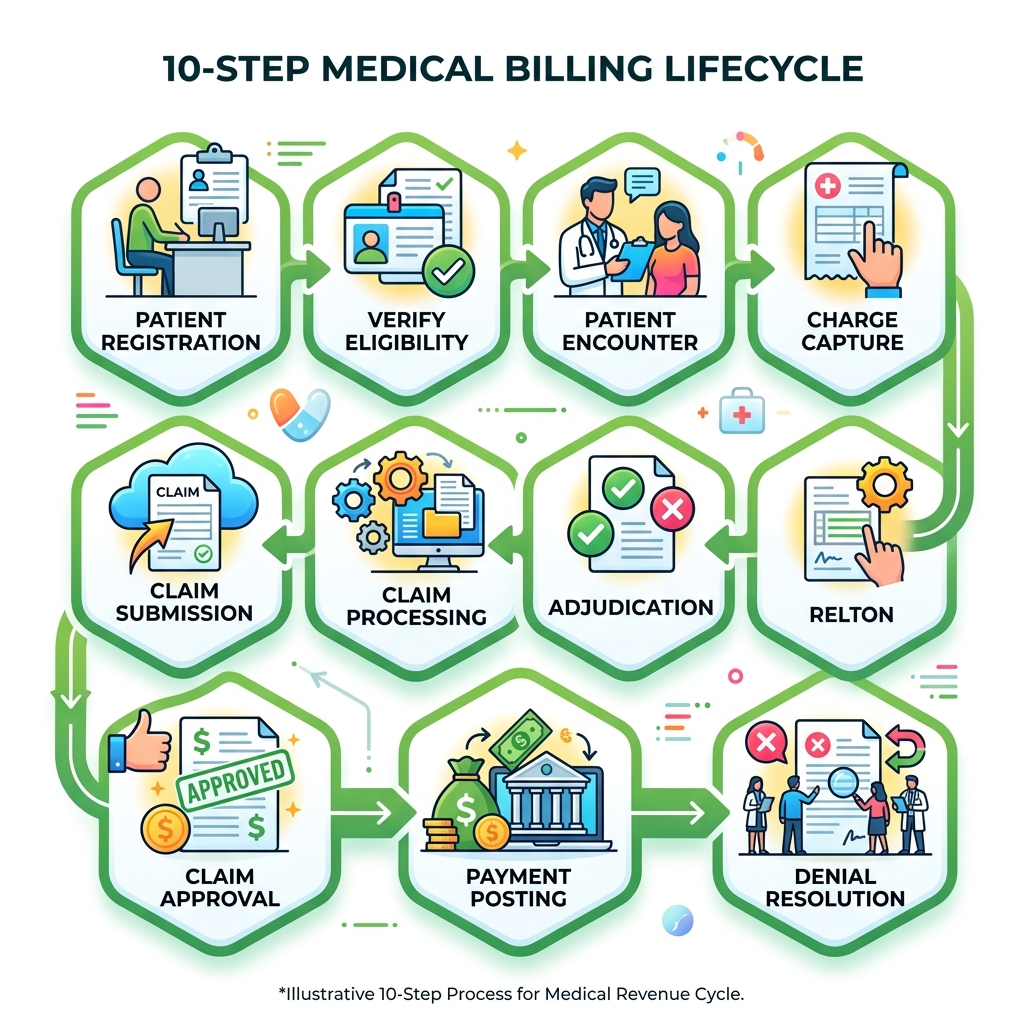
Key Performance Metrics of Top Billing Providers
When you are hunting for the best medical billing services USA has on the market, you shouldn't just take a salesperson's word for it. You need to look at the cold, hard data. In Revenue Cycle Management (RCM), metrics are the only truth. If a company can't show you their average "Days in A/R" or their "Clean Claim Rate," they are likely hiding a messy process.
Clean Claims and First-Pass Acceptance
A "clean claim" is one that is submitted to a payer without any errors or missing information. The industry average for first-pass acceptance—meaning the claim was accepted the very first time it hit the payer's system—sits around 70% to 80%. However, top-tier providers report rates as high as 97% to 99%.
At National Billing, we maintain a 98% clean claim rate because we believe that getting it right the first time is the only way to keep your cash flow steady. When 30% of payer claims are denied at first submission nationwide, and 32% of those are due to simple coding discrepancies, "cleanliness" becomes your most profitable metric.
Days in Accounts Receivable (A/R)
How long does your money sit in the insurance company's pocket before it hits yours? This is measured by "A/R Days." While many practices see their A/R stretch beyond 60 days, the best services aim to keep this under 30 days. For example, some high-performing RCM firms report a 24-day A/R recovery period.
Denial and Rejection Rates
With Medicare Advantage denial rates averaging 15.7% recently, your billing partner must be an expert at "denial management." It isn't just about fixing the claim; it's about a root-cause analysis to ensure that specific error never happens again.
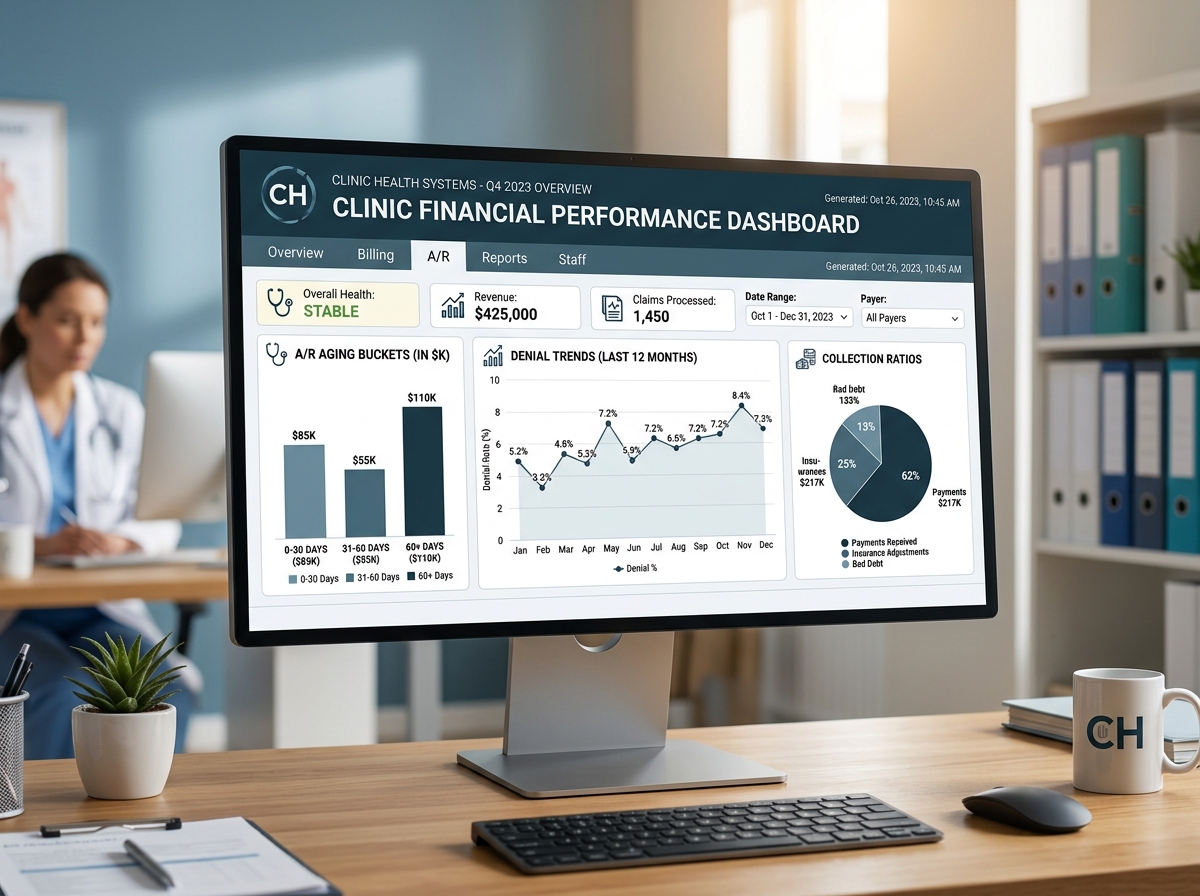
Table: Industry Average vs. Top-Tier Performance
Metric Industry Average Top-Tier Billing (e.g., National Billing) Clean Claim Rate 75-80% 96% - 99% Days in A/R 45 - 60+ Days Under 30 Days Denial Rate 12% - 15% Under 4% Net Collection Ratio 85% 96% - 99%
How Technology and AI Transform Revenue Cycles
We are living in an era where "manual" is a four-letter word in medical billing. The best medical billing services USA providers utilize today are those that have embraced AI and automation to out-compute the increasingly complex algorithms used by insurance payers.
AI-Powered Claim Scrubbing
Think of AI claim scrubbing as a super-powered spellchecker for medical codes. Top companies now use rules engines—some containing over 4 million individual rules—that scan every claim for potential issues before it is ever sent. This technology can flag high-risk claims, suggest more accurate E&M codes, and identify missing documentation that would otherwise lead to an automatic denial.
Seamless EHR Integration
Gone are the days of double data entry. Modern billing services integrate directly with your Electronic Health Record (EHR) or Practice Management (PM) software. This creates a seamless workflow where clinical data flows directly into the billing system. This integration reduces administrative burdens on your staff and minimizes the human errors that occur when moving data from one system to another.
Predictive Analytics and NLP
Some of the most advanced players in the 2026 market are using Natural Language Processing (NLP) "appeal bots." These bots can achieve denial overturn rates as high as 78% by generating payer-specific arguments based on millions of previous successful appeals. Predictive analytics also allow us to forecast your reimbursements and identify "revenue leakage" (money you should be getting but aren't) that standard reports often miss.
Selecting the Best Medical Billing Services USA for Your Practice Size
Not all billing companies are created equal, and a "one size fits all" approach usually fits no one. Your choice should depend heavily on your practice's specific needs, size, and specialty.
Small Practices and Solo Practitioners
For a small practice, you need a partner that offers more than just software; you need a team that acts as an extension of your office. Small practices often suffer the most from "billing headaches" because the doctor is trying to be the CEO, the provider, and the biller all at once. Look for providers that offer user-friendly platforms and transparent reporting so you can keep an eye on your money without having to chase it yourself.
Large Hospitals and Multi-Specialty Groups
Large organizations require enterprise-level scalability. If you have 100+ providers, you need a partner capable of handling high-volume claims and complex, multi-site workflows. Leading RCM providers excel here because they offer robust automation that can handle the sheer mass of data generated by a hospital system.
The Importance of Specialty Expertise
Specialty-specific expertise is non-negotiable. Billing for a cardiologist is worlds away from billing for a behavioral health clinic or a podiatrist. Each has unique CPT codes, modifier rules, and payer requirements. For instance, behavioral health requires specialized utilization reviews and payment negotiations that a general biller might not understand. When evaluating the best medical billing services USA has to offer, always ask: "How many providers in my specific specialty do you currently bill for?"
At National Billing Institute, we’ve spent 30 years refining our processes for a wide range of specialties. Our 100% USA-based team understands the nuances of local and national payers, ensuring you don't lose money to "generic" billing mistakes. You can learn more about our tailored approach on our Why Choose National page.
Understanding Pricing and Compliance Standards
How much should you pay for the best medical billing services USA? It’s the million-dollar question (sometimes literally). Pricing models vary, and understanding them is key to protecting your bottom line.
Common Pricing Models
Percentage of Collections: This is the most common model. You pay a percentage (typically between 2.49% and 9%) of the money the billing company actually collects for you. This "pay-for-performance" model aligns the billing company’s goals with yours—they don't get paid unless you do.
Flat Fee per Claim: Some companies charge a set amount for every claim processed, regardless of the reimbursement amount. This can be cost-effective for high-value specialties but expensive for primary care.
Hybrid or Subscription Models: Some providers offer a base monthly fee plus a smaller percentage of collections.
Compliance and Security: Non-Negotiables
In 2026, data security is more critical than ever. Any billing partner you consider must be fully HIPAA compliant. This means more than just saying they are; they should have SOC 2 attestations, regular internal audits, and robust encryption for data transmission.
Furthermore, they must stay current with CMS regulations, MACRA, and MIPS. If your billing company isn't helping you maximize your MIPS performance scores, they are leaving Medicare reimbursement money on the table.
If you are unsure if your current billing setup is costing you money, we recommend you Schedule a Billing Review with our experts to uncover hidden revenue leaks.
Frequently Asked Questions
How do the best medical billing services usa handle complex denials?
The best services don't just "resubmit" a denied claim. They perform a "root cause analysis." This involves identifying why the denial happened—was it a coding error, a lack of prior authorization, or a payer algorithm issue?
Top companies use "denial prevention" workflows, where they scrub claims against payer-specific rules before submission. When a denial does occur, they use a combination of expert human coders and AI-driven appeal tools to fight for the reimbursement. At National Billing, we treat every denial as a learning opportunity to tighten our "upfront" scrubbing process. You can see our full range of Services to see how we tackle these complexities.
What pricing models do the best medical billing services usa typically use?
As mentioned, the "Percentage of Collections" model is the industry gold standard because it guarantees the company is motivated to collect every cent. However, some practices prefer "Performance-based pricing," where the percentage might decrease as the collection volume increases, or "Hybrid models" that include credentialing and EHR software costs in one flat monthly bundle. Always look for transparency—hidden fees for "setup" or "patient statements" can quickly add up.
How long does it take to see a revenue increase after outsourcing?
While every practice is different, most of our clients see a noticeable stabilization in cash flow within the first 30 to 60 days. A significant revenue increase (often 15% to 30%) usually occurs within 3 to 4 months as the billing team clears out the "A/R backlog" (the old unpaid claims left over from your previous biller) and begins submitting new, cleaner claims that get paid faster.
Conclusion
The landscape of American healthcare is changing, and the "war" between payer algorithms and provider reimbursements is only getting more intense. To survive and thrive in 2026, you cannot afford to treat your billing as an afterthought.
Choosing among the best medical billing services USA has to offer requires a partner that combines cutting-edge AI technology with the seasoned intuition of human experts. At National Billing Institute, we offer exactly that. Based in Boca Raton, Florida, our 100% USA-based team brings over 30 years of experience to the table. We don't just process claims; we defend your practice's financial health, typically resulting in a 15-30% revenue increase for our partners.
Stop letting 12% of your hard-earned money vanish into the "denial abyss." Take control of your revenue cycle today.
Ready to see the difference professional billing can make?
Contact Us for a personalized consultation.
Explore our full suite of Services to find the right fit for your specialty.
Let us help you get paid more, faster, and with fewer headaches.
