The Complete Guide to Outsource Medical Billing
Why So Many Practices Choose to Outsource Medical Billing
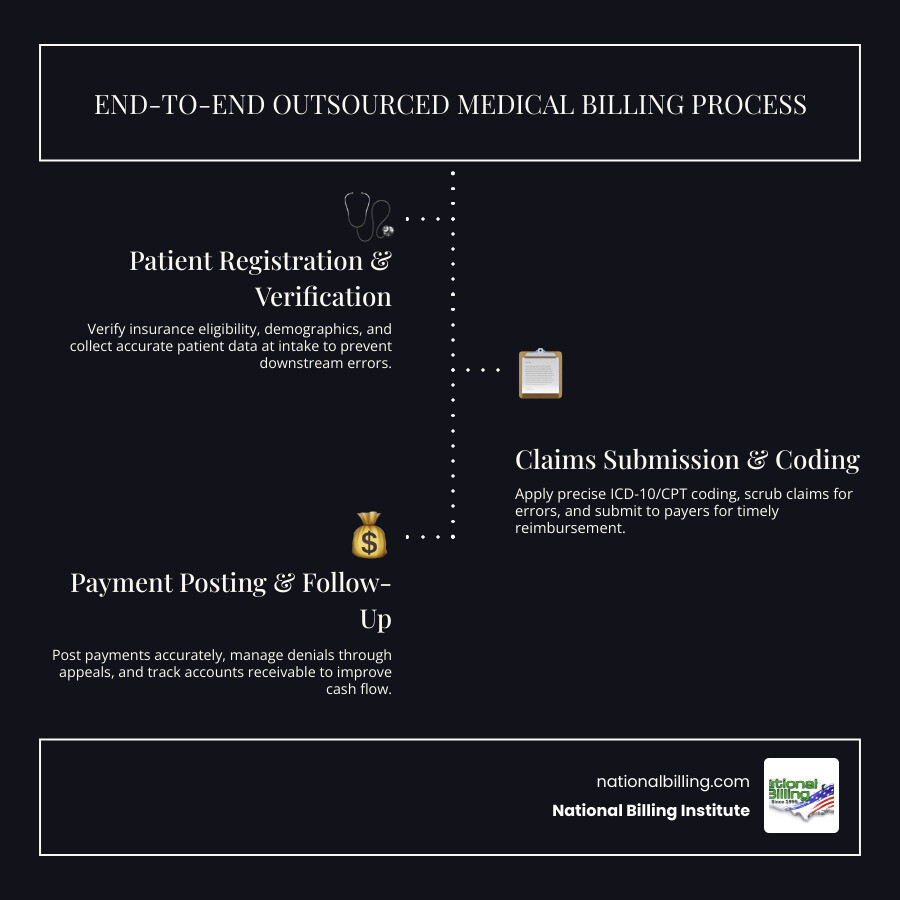
Outsource medical billing is the practice of hiring a third-party company to handle your claims, coding, payment posting, and accounts receivable — instead of managing it all in-house.
Here's what that typically includes:
Insurance eligibility verification
Medical coding (ICD-10, CPT, HCPCS)
Claim submission and scrubbing
Payment posting
Denial management and appeals
Patient billing and collections
Accounts receivable follow-up
If you're weighing your options, here's the short answer:
Outsourcing medical billing can reduce operational costs by up to 40%, improve collections by 15–30%, and free your staff to focus on patient care — but only when you partner with a reliable, HIPAA-compliant, US-based team.
Running a healthcare practice today means juggling patient care and a mountain of administrative work. Billing errors, claim denials, and staffing gaps quietly drain revenue every single day. In fact, a Sermo poll found that 26% of physicians say time savings is the biggest reason they choose to outsource — and the financial results often speak for themselves.
But outsourcing isn't a one-size-fits-all decision. The wrong partner can create new problems: lost control, compliance risks, and frustrated patients. That's why understanding exactly what outsourced medical billing involves — and what to look for in a partner — matters so much.
I'm Olivia Harper, Founder and Denial Management & Reimbursement Specialist of National Billing Institute, and I've spent over 30 years helping practices across the US decide whether and how to outsource medical billing — recovering millions in lost revenue along the way. In this guide, I'll walk you through everything you need to make a confident, informed decision.
Understanding the Shift to Outsource Medical Billing
As we navigate the healthcare landscape in May 2026, the complexity of Revenue Cycle Management (RCM) has reached an all-time high. RCM is the financial process that facilities use to track patient care episodes from registration and appointment scheduling to the final payment of a balance.
For many years, practices kept this in-house, thinking it offered more "control." However, as regulations tighten and coding becomes more technical, the shift to outsource medical billing has become a strategic necessity rather than just a convenience. The global medical billing outsourcing market was valued at USD 11,748 million in 2021 and has been growing at a rate of 11.3% annually. By now, in 2026, it is a cornerstone of a healthy practice.
The difference between in-house and outsourced billing often comes down to specialization. An in-house biller might spend only 400 hours a year on A/R work because they are also answering phones and checking in patients. In contrast, a specialist at a billing company dedicates 2,000 hours a year to that same task. That is 5x more experience focused solely on getting you paid.
Comparing the Costs: In-House vs. Outsourced
Expense Category In-House Billing Team Outsourced Billing (National Billing) Salaries & Benefits High (Health insurance, 401k, PTO) None (Included in service fee) Software & IT Expensive licenses & updates Included in percentage fee Training & Compliance Constant cost for new regulations Handled by the partner Office Space/Supplies Takes up clinical space Zero footprint Billing Errors Higher due to multi-tasking Lower (98%+ accuracy) Total Cost Model Fixed (Pay even when cash is low) Variable (Only pay when you get paid)
By moving to Outsource Medical Billing Services, you effectively transform a fixed departmental expense into a variable cost tied directly to your success. If you want to dive deeper into the basics of the process, our guide on Medical Billing explains the foundational steps in detail.
Core Services in the Outsourcing Model
When you decide to outsource medical billing, you aren't just "hiring a biller"; you're gaining a full-scale Healthcare Billing Services department. At National Billing, we focus on a "clean claim" strategy. This means we scrub every claim for errors before it ever reaches the payer.
Key services include:
Claims Processing: Real-time submission and tracking.
ICD-10 and CPT Coding: Utilizing AAPC-certified coders to ensure every procedure is documented accurately.
ICD-11 Transition: As the industry moves toward ICD-11, we handle the technical heavy lifting so your staff doesn't have to retrain.
Payment Posting: Ensuring that every penny from insurance and patients is accounted for and balanced.
Credentialing: Managing the paperwork to ensure your providers are enrolled with the right payers.
Suitability for Different Practice Sizes
Whether you are a solo practitioner in a small town or a large Federally Qualified Health Center (FQHC), outsourcing scales with you.
Small Practices: Often benefit the most. For a small practice, one biller quitting or going on maternity leave can stop cash flow entirely. Outsourcing provides business continuity.
Specialty Clinics: Cardiology, oncology, and behavioral health have unique coding nuances. A generalist in-house might miss these, but specialized Outsourced Medical Billing Services in USA ensure you are capturing every dollar specific to your field.
Large Organizations & FQHCs: These groups deal with massive volumes. We’ve seen FQHC clients experience a 45% increase in net receipts simply by applying professional RCM rigor to their high-volume claims.
Financial Impact and Revenue Cycle Optimization

The most compelling reason to outsource medical billing is the bottom line. Let’s talk numbers. Research shows that outsourcing can save a practice up to 40% in operational costs. But it’s not just about saving money; it’s about making more of it.
When you optimize your revenue cycle, you aren't just shifting work; you're transforming your cash flow. Professional billing teams are typically 5–15% better at collecting receipts than in-house teams. For a medium-sized practice, that difference can mean an additional $50,000 to $100,000 in revenue every year.
Our Revenue Cycle Management Solutions focus on "Revenue Leakage"—those small, unnoticed errors that result in unpaid claims. By identifying these trends, we can forecast your billing cycles and ensure a steady stream of income.
Improving Collections through Outsource Medical Billing
One of the biggest headaches in any medical office is the "A/R Days"—the average number of days it takes to get paid after a service is provided. In-house teams often struggle to keep this under 40 or 50 days.
When you outsource medical billing, the goal is usually to get those A/R days under 30. We have seen real-world cases where a facility experienced a 72% improvement in A/R days. Think about what that does for your stress levels—getting paid in 14 days instead of 50.
Effective denial management is the secret sauce here. Instead of just letting a denied claim sit in a pile, an outsourced team analyzes the root cause, corrects it, and resubmits it immediately. This proactive approach is a core part of Maximizing Revenue with Outsourced Billing.
Impact on Cash on Hand and Stability
Financial stability is about more than just a high collection rate; it's about "Days Cash on Hand." One client we worked with saw a 520% improvement in days with cash on hand after switching to a professional RCM model.
This stability allows you to:
Expand your practice or invest in new equipment.
Weather seasonal fluctuations in patient volume.
Avoid the "feast or famine" cycle that happens when an in-house biller falls behind.
Contingency planning is another hidden benefit. If a natural disaster or a local staffing crisis hits, your billing doesn't stop. Because we are a 100% USA-based team in Boca Raton, FL, we maintain high-level security and redundancy that a single office simply cannot match.
Navigating Risks, Compliance, and Data Security

We understand the hesitation. Giving a third party access to your patient data and finances is a big deal. In a Sermo poll, 30% of physicians cited "lack of control" as their biggest fear. However, modern outsourcing actually increases security and compliance compared to many in-house setups.
HIPAA, HITECH, and OIG Guidelines
Compliance is not a "set it and forget it" task. Regulations change constantly. A professional billing company has a dedicated compliance officer whose entire job is to stay updated on HIPAA and HITECH Act requirements.
At National Billing, we follow strict OIG (Office of Inspector General) guidelines for third-party billing. This includes:
Data Encryption: All data is encrypted at rest and in transit.
Regular Audits: We perform internal audits to catch any potential compliance issues before they become problems.
Business Associate Agreements (BAA): We sign comprehensive BAAs to ensure we are legally and ethically responsible for your data.
Working with the Best Medical Billing Services USA means you don't have to worry about a data breach or a HIPAA violation resulting from an unencrypted email sent by an untrained staff member.
Managing the Challenge of Control and Transparency
"Will I know what's going on with my money?" The answer should always be a resounding yes. Transparency is the antidote to the fear of losing control.
We use a Payer Matrix—a centralized knowledge base that standardizes how we handle different insurance companies. This ensures that no matter who is working on your account, the process is consistent.
Furthermore, we provide:
Real-time Dashboards: You can log in at any time to see exactly how many claims were sent, how many were paid, and what your current A/R looks like.
Monthly Performance Reviews: We sit down with you to discuss the trends we are seeing.
Patient Communication Protocols: 12% of physicians worry about patient complaints regarding billing. We handle patient inquiries with a dedicated, professional US-based call center that treats your patients with the same care you do.
How to Select an Outsource Medical Billing Partner
Choosing the right partner is the most critical step in this journey. Not all billing companies are created equal. Some "US-based" companies actually outsource their work to offshore teams, which can lead to communication barriers and security risks.
The "Boca Raton" Standard: Why US-Based Matters
When you outsource medical billing, you should ask for IRS Form 941. This form verifies the number of US-based employees a company actually has. At National Billing, we are proud to be 100% USA-based in Boca Raton, FL.
Why does this matter?
Communication: Your staff can speak directly to our billers without time zone delays or language barriers.
Security: Your patient data never leaves US soil, which is a major factor in data security and HIPAA compliance.
Specialty Expertise: US-based billers understand the nuances of the American insurance landscape, from Medicare/Medicaid to local private payers.
Software Integration and EHR Compatibility
You shouldn't have to change the way you practice medicine to fit your billing company. A top-tier partner should integrate seamlessly with your existing Electronic Health Record (EHR) and Practice Management (PM) systems.
We have experience with over 80+ software platforms, including Epic, Cerner, Athenahealth, and eClinicalWorks. This "turn-key" implementation means we can often be up and running in as little as 30 days without disrupting your daily workflow.
Future Trends in Outsource Medical Billing
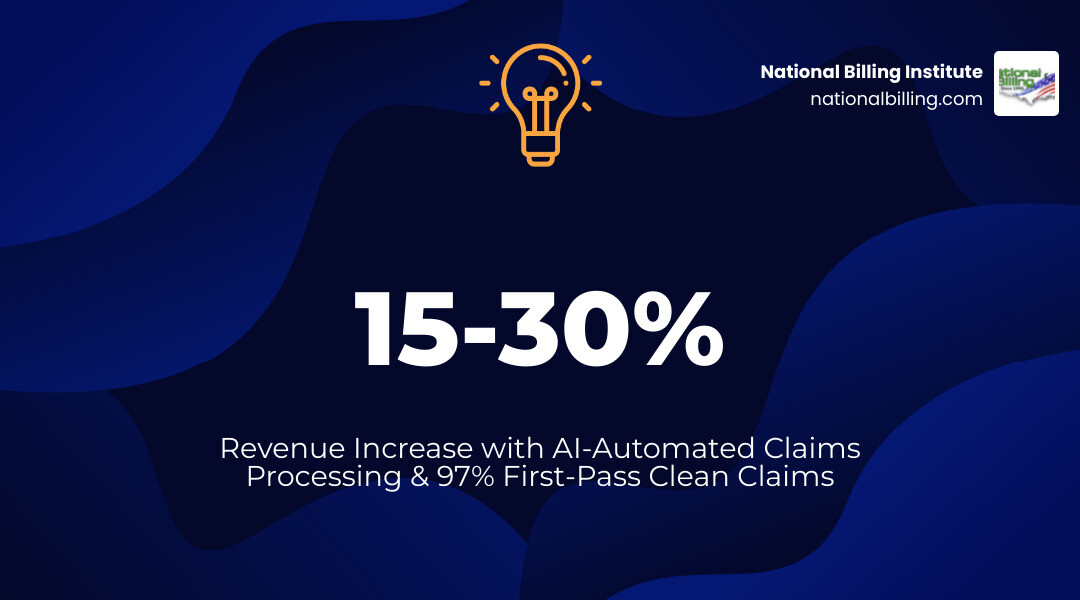
The future of billing is not just manual entry; it’s AI-automated claims processing. This is one of our unique strengths. By using AI to "scrub" claims, we can catch errors that the human eye might miss, leading to a 97% first-pass clean claim rate.
Other trends we are seeing for 2026 and beyond:
Predictive Analytics: Using data to predict which payers are likely to deny certain codes, allowing us to appeal before the denial even happens.
24/7 Operations: While our team is US-based, our automated systems work around the clock to ensure claims are moving through the system.
Value-Based Care Support: Helping practices transition from "fee-for-service" to "value-based care" models, which require much more complex reporting.
Frequently Asked Questions about Medical Billing Outsourcing
Is outsourcing medical billing suitable for small or solo practices?
Absolutely. In many ways, small practices benefit the most. It eliminates the overhead of a full-time employee and protects the practice from "single-point-of-failure" risks (like a biller quitting). It allows a solo doctor to focus 100% on the patient while we handle the paperwork.
What are the typical pricing models for outsourced billing?
Most companies, including ours, work on a percentage of net collections. This means we only get paid when you get paid. Typical rates range from 6% to 8%, depending on your volume and specialty. This aligns our interests perfectly—we are motivated to collect every single dollar for you! Some companies offer flat-fee or per-transaction models, but the percentage model is generally the most transparent and effective.
How does outsourcing affect the patient billing experience?
If done correctly, it improves it. Patients often find billing confusing. Our professional team provides clear, easy-to-read statements and a dedicated US-based help line to answer their questions. This reduces the administrative burden on your front-desk staff, who no longer have to handle angry calls about insurance co-pays.
Conclusion
Deciding to outsource medical billing is one of the most significant moves you can make for the health of your practice. It’s about more than just "outsourcing tasks"; it’s about gaining a partner dedicated to your financial growth.
At National Billing Institute, we don't just process claims—we optimize your entire revenue cycle. With our 100% USA-based team in Boca Raton, 30+ years of experience, and AI-automated systems, we typically see our clients enjoy a 15–30% increase in revenue.
Stop letting billing errors and staffing headaches hold your practice back. Let us handle the complexity so you can get back to what you do best: caring for your patients.
Ready to see how much you could be saving? Explore our Services or contact us today for a free billing audit.