
The Ultimate List of Medical Coding Firms
Medical Coding Firms: What They Are and Which Ones Lead in 2026
Medical coding firms translate clinical documentation into the standardized codes that determine how — and how much — your practice gets paid. According to the AAPC, accurate coding is the foundation of healthcare reimbursement. If you need a quick reference, here are the top medical coding firm profiles to evaluate in 2026:
National Billing Institute — 100% US-based, 98% collection rate, 30+ years of experience
Specialty-Specific Firms — High-accuracy coding for complex surgical and diagnostic fields
Enterprise RCM Partners — Large-scale operations processing significant annual A/R
Workflow-Integrated Solutions — Coding services that live directly within clinical software
Analytics-Driven Firms — High accuracy rates using proprietary record review technology
Post-Acute Specialists — Specialized expertise in home health and hospice settings
Compliance-First Groups — High first-pass claims rates with dedicated compliance teams
Domestic Coding Networks — 100% USA-based teams with specialty proficiency exams
Audit-Ready Partners — Average 10+ years experience with proprietary audit tools
CDI-Focused Firms — Focused on profee and outpatient clinical documentation improvement
The U.S. medical coding market was valued at $18.2 billion in 2022 and is growing at nearly 10% per year through 2030. That growth reflects just how central accurate coding has become to keeping a practice financially healthy.
Getting codes wrong — or falling behind on payer rule changes — leads directly to denied claims, delayed payments, and revenue leakage that most practices never fully recover. With 41% of providers now reporting initial denial rates above 10%, the stakes have never been higher.
I'm Olivia Harper, Founder and Denial Management & Reimbursement Specialist of National Billing Institute, and I've spent over 30 years helping practices across the U.S. navigate the full spectrum of medical coding firms and revenue cycle challenges. In this guide, I'll walk you through everything you need to select the right coding partner for your practice's size, specialty, and revenue goals.
Why Medical Coding Firms are Essential for Revenue Cycle Management
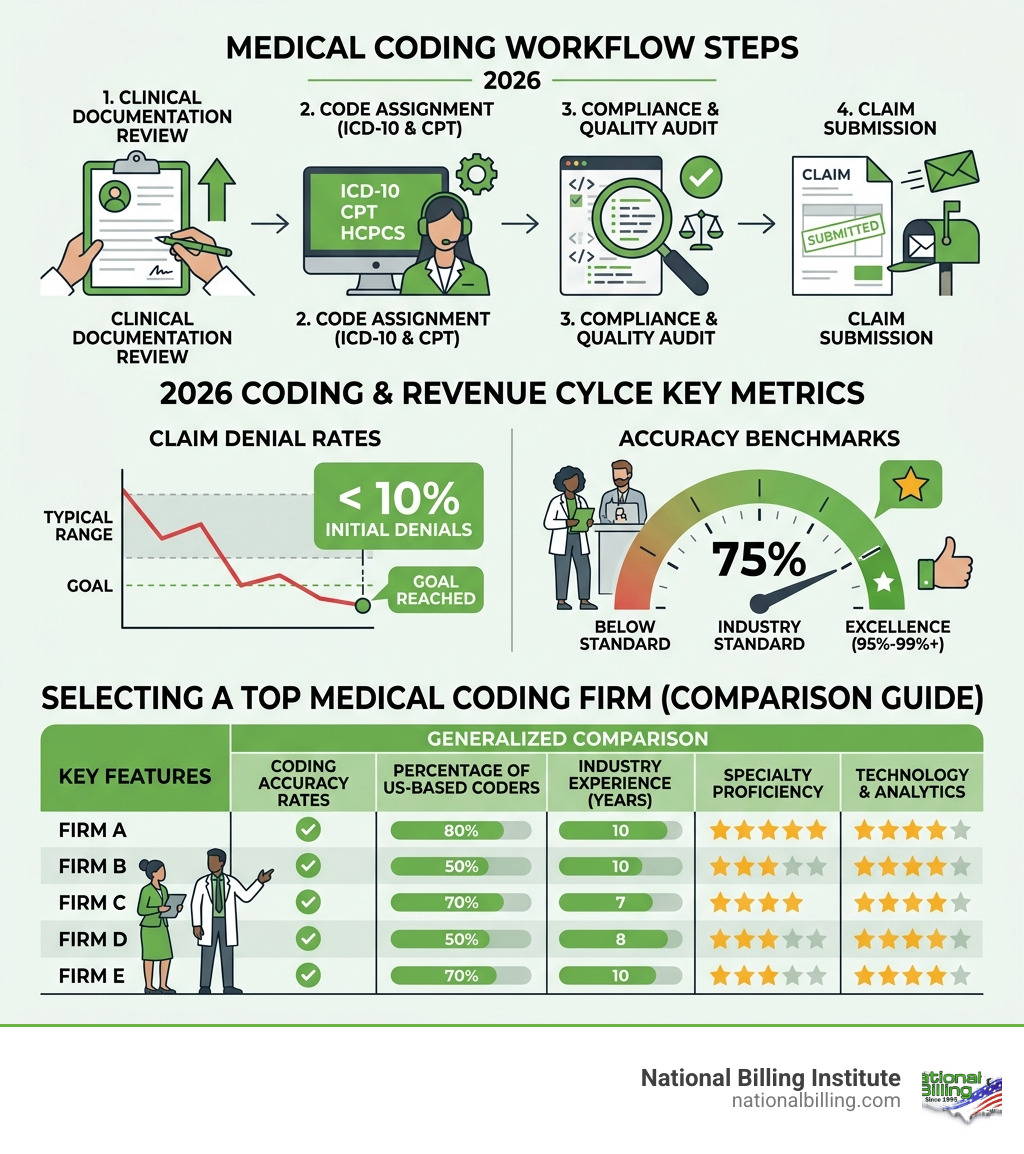
At its core, medical coding is the process of taking a doctor's notes and turning them into a universal language of alphanumeric codes. These codes—primarily ICD-10 for diagnoses and CPT/HCPCS for procedures—tell insurance companies exactly what happened during a patient visit.
Without specialized medical coding firms, most practices find themselves shouting into a void. If the code doesn't perfectly match the documentation, the claim is rejected. This is why coding is the foundation of the entire revenue cycle. It isn't just about "billing"; it's about protecting your practice's financial integrity.
By partnering with experts, you ensure that your Services are documented with the precision required to trigger maximum reimbursement. Beyond just getting paid, these firms keep you in the "safe zone" for HIPAA compliance. In an era where a single audit can derail a practice, having a partner that prioritizes Company Info and regulatory adherence is non-negotiable.
The Role of Medical Coding Firms in Reducing Denials
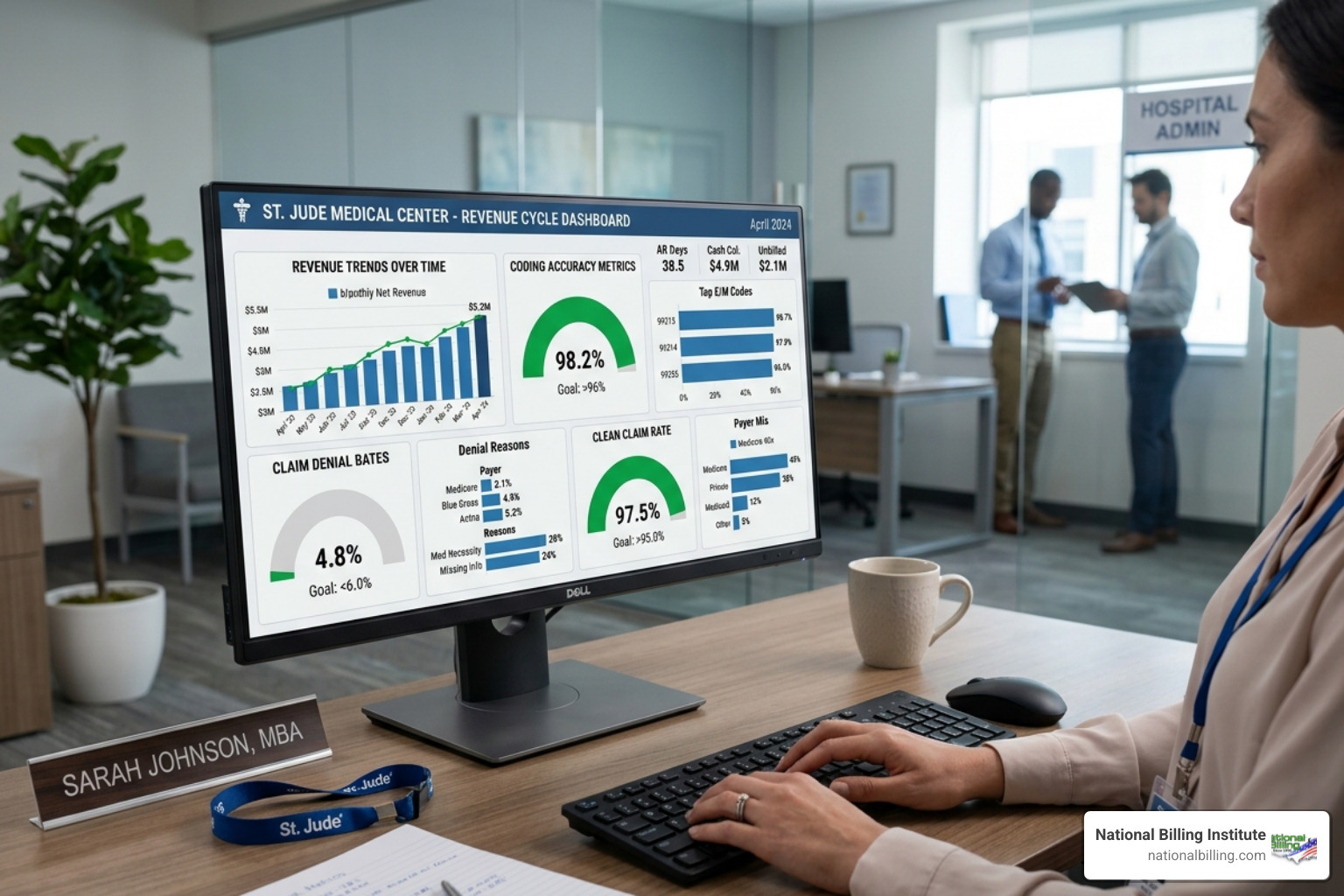
If you’ve noticed your "clean claim rate" dipping lately, you aren't alone. In 2026, payers are using more sophisticated algorithms than ever to find reasons not to pay. Top-tier medical coding firms act as your first line of defense.
A "clean claim" is one that passes through the payer's system without errors on the first try. Leading firms achieve first-pass acceptance rates as high as 98% by using "scrubbing" technology that checks for payer-specific rules before the claim ever leaves the office. When you Why Choose National, you're choosing to close the gap between services rendered and money in the bank.
Effective denial management isn't just about fixing mistakes; it's about root-cause analysis. If a specific payer changes their policy on a Tuesday, your coding partner should have that rule updated in their system by Wednesday. This proactive approach is what keeps your A/R cycle short and your cash flow steady.
Essential Features of Leading Medical Coding Firms
When you begin your search, don't just look at the price tag. You need to look under the hood. Here are the "must-haves" for any firm worth their salt in 2026:
100% USA-Based Teams: Data security and communication are much smoother when your coders are domestic. It ensures a deeper understanding of U.S. payer nuances and strict HIPAA adherence.
Certified Expertise: Look for teams where every coder holds credentials from AAPC or AHIMA. Top-tier firms require rigorous specialty-specific proficiency exams during their hiring process.
Seamless EHR Integration: Your coding partner should work inside your existing system (like Epic or Cerner) to avoid data silos and manual entry errors.
Specialty-Specific Knowledge: A coder who excels at pediatrics might struggle with complex cardiovascular surgery. You need a firm that assigns coders based on your specific field.
Audit Readiness: The best firms perform their own internal quality assurance (QA) audits, often maintaining a 95% to 99% accuracy rate.
Key Challenges in 2026 Medical Coding
The landscape of medical coding has shifted dramatically over the last few years. We are currently facing a "perfect storm" of administrative challenges.
First, there is a massive staffing shortage. Recent data shows that 53% of medical group leaders identify staffing as their biggest hurdle, with turnover in revenue cycle roles hovering around 40%. When an in-house coder leaves, the backlog begins immediately, and revenue stalls.
Second, we are seeing the rise of "Algorithmic Downcoding." Payers are now using AI and Natural Language Processing (NLP) to scan clinical notes. If they find the slightest discrepancy, they automatically downcode the service to a lower reimbursement level or deny it for "medical necessity."

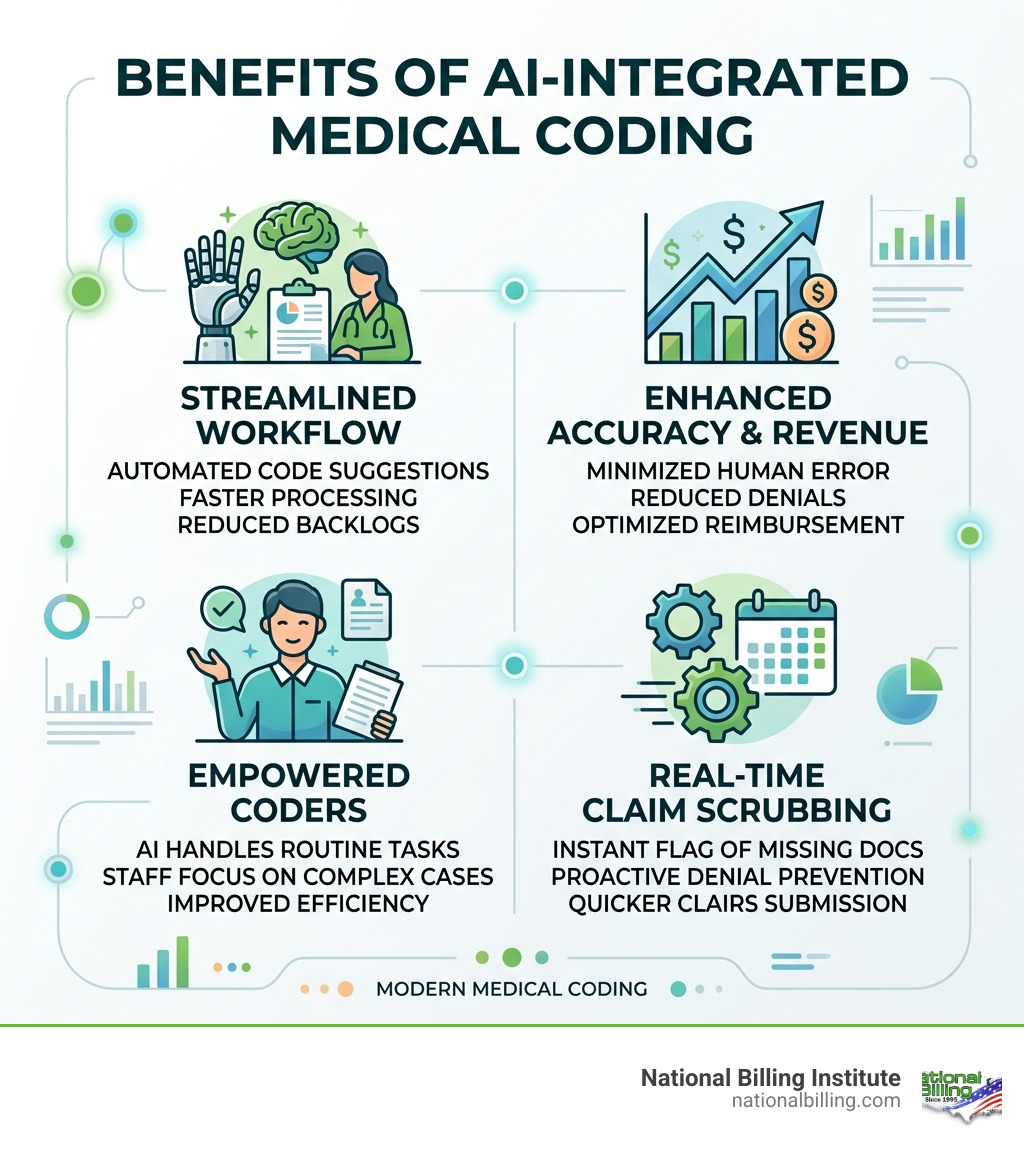
Essentially, practices are being "out-computed" by insurance companies. To fight back, medical coding firms have had to integrate their own AI-driven claim scrubbing and predictive analytics to level the playing field.
Criteria for Evaluating Top Medical Coding Firms
Choosing a partner is a major decision. To make it easier, we’ve broken down the key metrics you should ask for during a demo call.
Metric Industry Standard Top Firm Performance Coding Accuracy 90% - 92% 98% - 99.9% First-Pass Acceptance 91% 98% + A/R Days 35 - 40 Days 15 - 20 Days Pricing Model Flat Fee % of Collections (3-7%)
Beyond the numbers, look at their onboarding timeline. Most software-heavy implementations take 30 to 90 days, while staffing-focused firms can often ramp up within a few weeks. Don't be afraid to Contact Us to ask for a specific breakdown of how a firm handles data security—look for SOC 2 or HITRUST certifications to ensure your patient data is encrypted and protected.
Specialized Services and Technology Integration
Modern medical coding firms offer much more than just ICD-10 entry. Depending on your facility, you might need:
Inpatient & Outpatient Coding: Handling the complexities of hospital stays versus quick clinic visits.
Profee (Professional Fee): Coding for the specific work done by the physician, distinct from the facility fees.
Risk Adjustment & HCC: Essential for Medicare Advantage and value-based care, ensuring that the "sickness" of your patient population is accurately captured to justify higher capitation rates.
CDI (Clinical Documentation Improvement): This is a proactive service where coders work with doctors to improve how they write their notes. Research shows that nearly 50% of denials could be fixed by a strong CDI program.
AI and Automation: Leading firms use AI to suggest codes or flag missing documentation in real-time. This reduces the time clinicians spend on paperwork by up to 50%.
Frequently Asked Questions about Medical Coding Firms
What is the difference between medical billing and medical coding?
Think of it like this: coding is the "translation" and billing is the "delivery." Coding takes the medical record and turns it into standardized codes (ICD-10, CPT). Medical billing takes those codes, puts them on a claim form, sends them to the insurance company, and follows up until the check arrives (or the denial is fought). Most medical coding firms offer both, but some specialize in just one.
What are the common pricing models for coding services?
There are three main ways you’ll pay:
Percentage of Collections: Usually 3% to 10%. You only pay when you get paid.
Per-Chart/Flat Fee: You pay a set amount for every record coded, regardless of the reimbursement amount.
Hybrid/FTE: You pay for a "Full-Time Equivalent" staff member who works exclusively for you, but is managed by the firm.
How long does it take to onboard a new coding partner?
If you are moving to a new software system, expect 60 to 90 days. If you are simply adding outsourced coders to your existing EHR, you can often see a "full ramp-up" in 30 to 45 days. The best firms provide a dedicated project manager to ensure your revenue doesn't dip during the transition.
Conclusion
In the "RCM War of 2026," your practice cannot afford to be under-equipped. Medical coding firms are no longer just a luxury for large hospitals; they are a survival tool for any practice that wants to remain independent and profitable.
At National Billing Institute, we’ve spent over 30 years perfecting the balance between human expertise and technological speed. Our 100% USA-based team is dedicated to one goal: making sure you get every penny you've earned. We've helped our clients see revenue increases of 15-30% simply by tightening up their coding and denial management processes.
Don't let "algorithmic downcoding" or staffing headaches erode your hard-earned revenue. Schedule Billing Review with us today, and let's build a revenue cycle that works as hard as you do.
