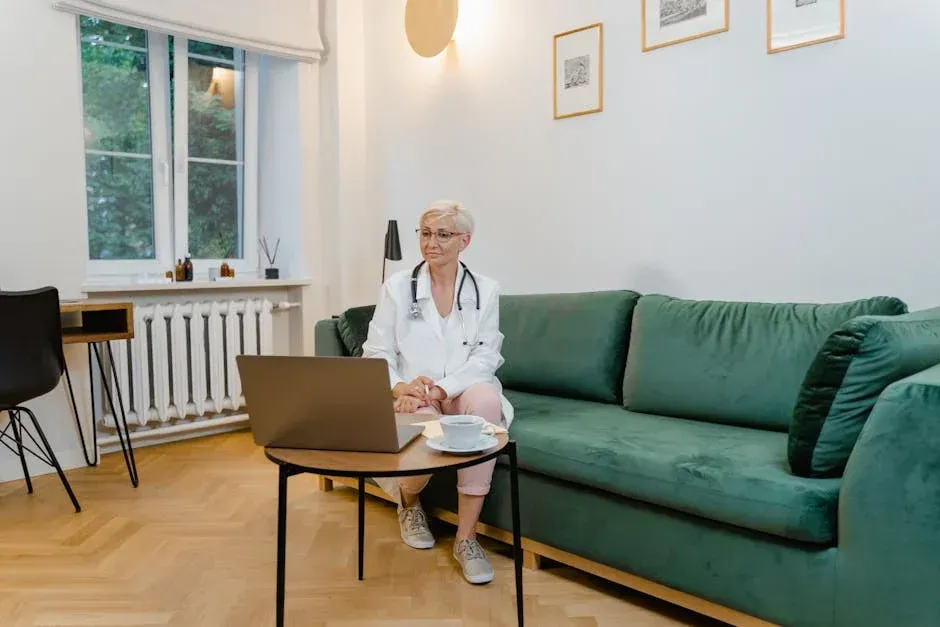
Stop Leaving Money on the Table with Proper Telemedicine Billing
Why Getting Telemedicine Billing Right Is Costing You Money
Knowing how to bill for telemedicine visits correctly is one of the fastest ways to stop revenue from slipping through the cracks. Here is a quick overview of the core steps:
Verify patient eligibility and confirm the service is covered by the payer
Select the correct CPT or HCPCS code (e.g., 99202–99215 for E/M visits)
Choose the right Place of Service (POS) code — POS 02 for telehealth outside the patient's home, POS 10 for the patient's home
Append the correct modifier — Modifier 95 for synchronous audio-video, Modifier 93 for audio-only
Document thoroughly — patient consent, modality used, medical necessity, and provider location
Submit the claim and track for denials or payment discrepancies
Telehealth is no longer a temporary workaround. It is a permanent part of how care gets delivered — and reimbursed. But the billing rules are layered, payer-specific, and keep changing. Medicare, Medicaid, and private insurers each follow different rules. Miss a modifier, use the wrong POS code, or skip a documentation step, and you are looking at a denied claim or delayed payment.
The stakes are real. CMS even placed a temporary claims hold after telehealth flexibilities expired on October 1, 2025, catching many practices off guard. Meanwhile, reimbursement rates, covered services lists, and geographic restrictions continue to shift.
If your practice is seeing more denials than it should, or leaving money on the table after every telehealth encounter, this guide will walk you through exactly what you need to know — from codes and modifiers to payer-specific rules and documentation requirements.
I'm Olivia Harper, Founder and Denial Management & Reimbursement Specialist of National Billing Institute, and with over 30 years of hands-on experience in revenue cycle management, I've helped hundreds of practices master how to bill for telemedicine visits and consistently recover revenue they didn't know they were losing. Let's break it all down so your team can submit cleaner claims and get paid faster.

Understanding the Core Components of How to Bill for Telemedicine Visits
To master how to bill for telemedicine visits, we first have to speak the language of the technology being used. Not all virtual visits are created equal in the eyes of an insurance adjuster. The "modality"—or the method of communication—dictates which codes and modifiers we apply to the claim.
Synchronous vs. Asynchronous Workflows
Synchronous Telemedicine: This is real-time, "live" interaction. It usually involves two-way audio and video. Think of it as a virtual version of a face-to-face office visit.
Audio-Only: While technically synchronous, many payers (especially Medicare post-2024) have specific restrictions on when you can bill for a phone call versus a video call. As of January 1, 2025, Medicare allows audio-only if the provider has video capability but the patient is unable or unwilling to use it.
Asynchronous (Store-and-Forward): This involves transmitting medical data (like X-rays or photos) to a practitioner who reviews them at a later time. This is common in specialties like dermatology or ophthalmology.
Choosing the right modality is the first step in ensuring your medical billing services are accurate. If you bill a video code for a phone call, you're inviting an audit. For more details on aligning services with technology, check out the official HHS guide on billing for telehealth.
Essential CPT and HCPCS Codes for How to Bill for Telemedicine Visits
The backbone of how to bill for telemedicine visits lies in the CPT (Current Procedural Terminology) codes. Most providers will spend the bulk of their time using standard Evaluation and Management (E/M) codes, but there are several "virtual-only" codes you need to know.
Service Type CPT/HCPCS Codes Description New Patient Office Visit 99202–99205 Based on time or medical decision-making (MDM) Established Patient Visit 99211–99215 Standard office visits conducted via audio-video Virtual Check-in G2012 Brief (5-10 min) communication to see if a visit is needed Telephone E/M (MD/DO/NP/PA) 99441–99443 Audio-only visits (5-30 minutes) Telephone (Non-physician) 98966–98968 Audio-only for assessment/management by qualified health professionals
Annual Wellness Visits (AWV): Yes, you can bill these via telehealth! Medicare allows the AWV (but not the Initial Preventive Physical Examination/IPPE) to be conducted virtually. You can even use self-reported vitals if the patient has the equipment at home.
Navigating Place of Service (POS) and Modifiers
One of the most common errors we see at National Billing Institute involves the Place of Service (POS) code. Using the wrong one is a "red flag" that leads to instant denials.
POS 02: Use this when the telehealth service is provided in a location other than the patient's home (e.g., the patient is at a clinic or hospital).
POS 10: This was introduced in 2022. Use this specifically when the patient is in their home.
The Modifier Maze: Modifiers tell the payer that the service was performed via telehealth.
Modifier 95: Synchronous audio-video. This is the "gold standard" for most private payers and Medicare.
Modifier 93: Synchronous audio-only. Use this for those telephone-only encounters.
Modifier FQ: Used by FQHCs and RHCs for audio-only mental health services.
Modifier GT: A legacy code ("via interactive audio and video") still required by some state Medicaid programs and Medicare Advantage plans.
For a deeper dive into current rates, the National Telehealth Authority provides excellent updated tables.
Medicare and Medicaid Reimbursement Post-PHE
The end of the Public Health Emergency (PHE) changed the landscape of how to bill for telemedicine visits. While many flexibilities were extended through the Consolidated Appropriations Act, we are moving toward a more structured environment.
One critical concept is the distinction between the Distant Site (where the provider is) and the Originating Site (where the patient is).
Originating Site Facility Fee (Q3014): If a patient comes to your clinic to use your equipment to talk to a specialist elsewhere, you can bill code Q3014. For CY 2025, this fee is $31.04, and it is set to increase to $31.85 in 2026 (based on a 2.7% Medicare Economic Index increase).
Medicare has extended the "patient's home" as an acceptable originating site for most services through 2024, but geographic restrictions (the requirement that the patient be in a rural area) are beginning to return for non-mental health services. Stay updated with the AAFP’s coding resources to ensure you aren't caught by these "reverting" rules.
Special Rules for FQHCs, RHCs, and Safety-Net Providers
Federally Qualified Health Centers (FQHCs) and Rural Health Clinics (RHCs) don't bill the same way as standard private practices. Instead of a standard fee schedule, they often use an All-Inclusive Rate (AIR) or the Prospective Payment System (PPS).
Medical Telehealth: Medicare will continue to pay RHCs and FQHCs for medical telehealth services through December 31, 2026.
Mental Health: For telebehavioral health, use modifier FR if a real-time audio-only interaction was used because the patient was unable/unwilling to use video.
Code G0466-G0470: These are used for FQHC encounters to ensure the correct payment bundle is triggered.
At National Billing Institute, we specialize in these complex "safety-net" billing rules. If you're wondering why choose National Billing, it's because we understand the nuances of FQHC/RHC reimbursement that general billers often miss.
Advanced Billing: RPM, RTM, and eConsults
If you want to maximize your revenue, you need to look beyond the standard office visit. Advanced telemedicine includes monitoring and interprofessional consultations.
Remote Patient Monitoring (RPM): RPM involves using FDA-defined medical devices to collect physiological data (like blood pressure or glucose).
99453: Initial setup and patient education.
99454: Device supply and daily recordings (requires at least 16 days of data in a 30-day period).
99457/99458: Clinical staff time spent reviewing data and communicating with the patient (20-minute increments).
Remote Therapeutic Monitoring (RTM): RTM (codes 98975–98981) is similar but focuses on non-physiological data like respiratory system status or musculoskeletal system status.
eConsults (Interprofessional Consultations): Sometimes you need a specialist's opinion but don't need a full patient referral.
99451: Specialist spends 5+ minutes on a consultative review.
99452: The treating physician spends time preparing the request and coordinating the consult.
Documentation Requirements to Ensure Clean Claims
You can have the right code and the right modifier, but if your documentation is weak, a payer can claw back that money two years from now. To master how to bill for telemedicine visits, your charts must include:
Patient Consent: You must document that the patient consented to a telehealth visit. This can be verbal, but it must be noted in the record for every visit.
Modality Rationale: If you are billing for an audio-only visit, you must document why video was not used (e.g., "Patient does not have a smartphone or high-speed internet").
Start and End Times: Many telehealth codes are time-based. Don't just say "20 minutes." Document "10:15 AM to 10:35 AM."
Locations: Note both the provider's location and the patient's location (e.g., "Provider at office, patient at home").
Participants: List everyone present on the call (e.g., the patient's daughter or a resident).
For more on maintaining high-standard records, the AAPL provides excellent recommendations on reimbursement-focused documentation.
Avoiding Common Errors in How to Bill for Telemedicine Visits
Even the most experienced teams make mistakes. Here are the "Heavy Hitters" that lead to denials:
Unbundling: Don't bill a "Virtual Check-in" (G2012) if it leads to an in-person visit within 24 hours or the next available appointment. It's considered part of the upcoming E/M visit.
State Licensure Issues: Generally, you must be licensed in the state where the patient is located at the time of the visit. Cross-state billing without the proper registry or license is a major compliance risk.
Private Payer Variations: While Medicare has clear rules, private insurers (Aetna, UnitedHealthcare, etc.) vary wildly. Some follow Medicare; others have their own proprietary "telehealth" codes.
Medicaid Specifics: Every state is different. For example, Health First Colorado (Colorado Medicaid) allows a $5.00 transmission fee if you append modifier GT to specific procedure codes.
If these variations feel overwhelming, contact us for a billing consultation. We take the guesswork out of state-specific and payer-specific rules.
Frequently Asked Questions about Telemedicine Billing
Can I bill for an Annual Wellness Visit (AWV) via telehealth?
Yes. Medicare allows the AWV to be performed via telehealth. You should use the standard AWV codes (G0438 or G0439) with the appropriate telehealth modifier (95) and POS code (10 or 02).
What is the difference between POS 02 and POS 10?
POS 02 is used when the patient is at an "originating site" (like a clinic) that is not their home. POS 10 is used when the patient is in their private residence. Using POS 10 often results in a higher "non-facility" reimbursement rate.
How do I bill for audio-only visits in 2025?
Use CPT codes 99441–99443 for physicians or 98966–98968 for other qualified professionals. Ensure you append Modifier 93 and document the specific reason why video technology was not used for the encounter.
Conclusion
Mastering how to bill for telemedicine visits is about more than just clicking a different box in your EHR. It requires a strategic approach to documentation, a deep understanding of shifting Medicare flexibilities, and a hawk-like eye for payer-specific modifiers.
At National Billing Institute, we don't just process claims; we optimize your entire revenue cycle. Our 100% USA-based team in Boca Raton, FL, uses AI-automated processing to ensure the lowest denial rates in the industry. Most of our clients see a 15-30% increase in revenue simply by fixing the errors we've discussed in this guide.
Don't let confusing regulations keep you from getting paid for the vital care you provide. Whether you're a solo practitioner or a large multi-state group, we are here to help you navigate the future of medicine.
Ready to stop leaving money on the table? Schedule a Billing Review with our experts today and see how much revenue you could be recovering.
